
Pasta Puttanesca smells like garlic and olives the second it hits the pan, and it's one of those recipes that tastes way fancier than the effort you put in. I made this for the first time after a long day when all I had were pantry staples, no fresh vegetables, no meat, just canned tomatoes, olives, and capers. Twenty minutes later I was twirling spaghetti covered in this salty, tangy sauce and wondering why I'd ever ordered takeout.
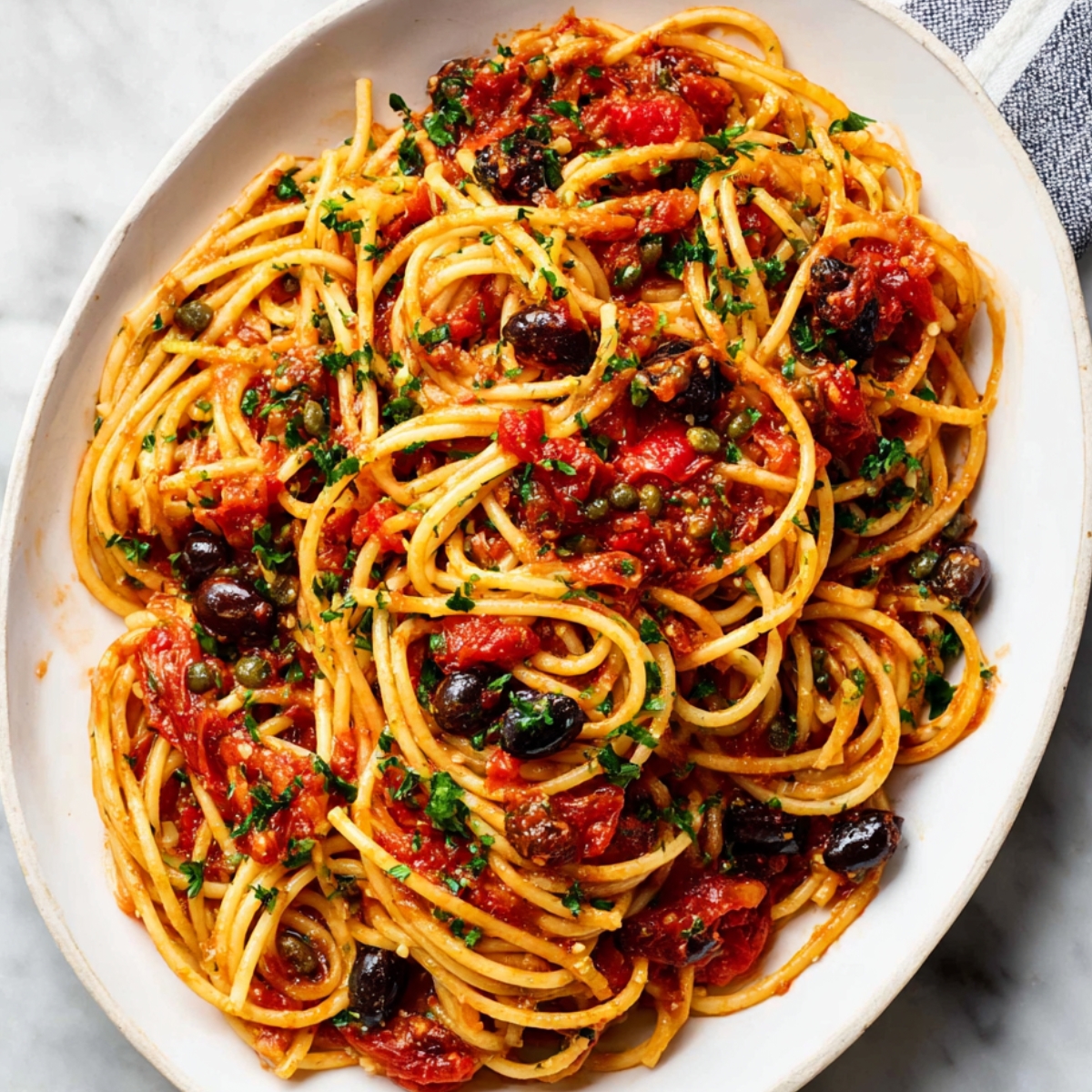
It's become my go-to when I need something fast and bold, kind of like how I reach for Crispy Lumpia when I'm craving something crispy or Best Lebanese Lentil Soup when I want comfort in a bowl.
Why You'll Love This Pasta Puttanesca Recipe
This pasta puttanesca recipe is bold, tangy, and comes together faster than most takeout orders. Here's why it works:
Quick and easy. You'll have dinner on the table in 30 minutes with minimal prep.
Pantry-friendly. Most of the ingredients are things you probably already have, canned tomatoes, olives, capers, garlic, and pasta.
Big flavor, low effort. The salty, briny sauce tastes like you spent hours on it, but it's actually one of the simplest Italian Pasta Puttanesca out there.
Weeknight hero. It's filling, satisfying, and perfect for busy evenings when you want something homemade but don't have a lot of time.
Endlessly adaptable. You can add anchovies, swap in different olives, or toss in fresh basil if you have it.
If you love Mediterranean pasta with tons of flavor and barely any work, this one's a keeper.
Jump to:
Pasta Puttanesca Ingredients
These ingredients come together to make a rich, tangy sauce that coats every strand of spaghetti.
See Recipe Card Below This Post For Ingredient Quantities
San Marzano tomatoes: These whole peeled tomatoes have a sweet, rich flavor that makes the sauce taste authentic. Hand-crushing them gives the sauce a rustic texture.
Extra-virgin olive oil: The base of the sauce. Good olive oil adds richness and helps the garlic and shallot bloom without burning.
Shallot: Milder and slightly sweeter than onion, it adds depth without overpowering the other flavors.
Sea salt: Balances the acidity of the tomatoes and brings out the flavors of the olives and capers.
Garlic: Finely chopped garlic infuses the oil and adds that classic garlic tomato pasta sauce flavor.
Red pepper flakes: A little heat to balance the salty, briny ingredients. You can adjust to your taste.
Capers: Briny, tangy little bursts of flavor that are essential to puttanesca sauce.
Kalamata olives: Rich, salty, and slightly fruity. Roughly chopping them helps distribute the flavor throughout the sauce.
Spaghetti pasta: Any long pasta works, but spaghetti is traditional and perfect for twirling up all that sauce.
Fresh parsley: Adds a bright, fresh finish. It's optional but really makes the dish pop.
How To Make Pasta Puttanesca
Here's how to make Pasta Puttanesca from start to finish.
Prepare the tomatoes: Place the drained tomatoes in a large bowl and use your hands to crush them into chunky pieces. This gives the sauce a rustic texture and helps the tomatoes break down faster while cooking.
Sauté shallot and garlic: Heat the olive oil in a large skillet over medium heat. Add the finely chopped shallot and salt. Stir occasionally and cook for 4 to 5 minutes, until the shallot softens and turns translucent.
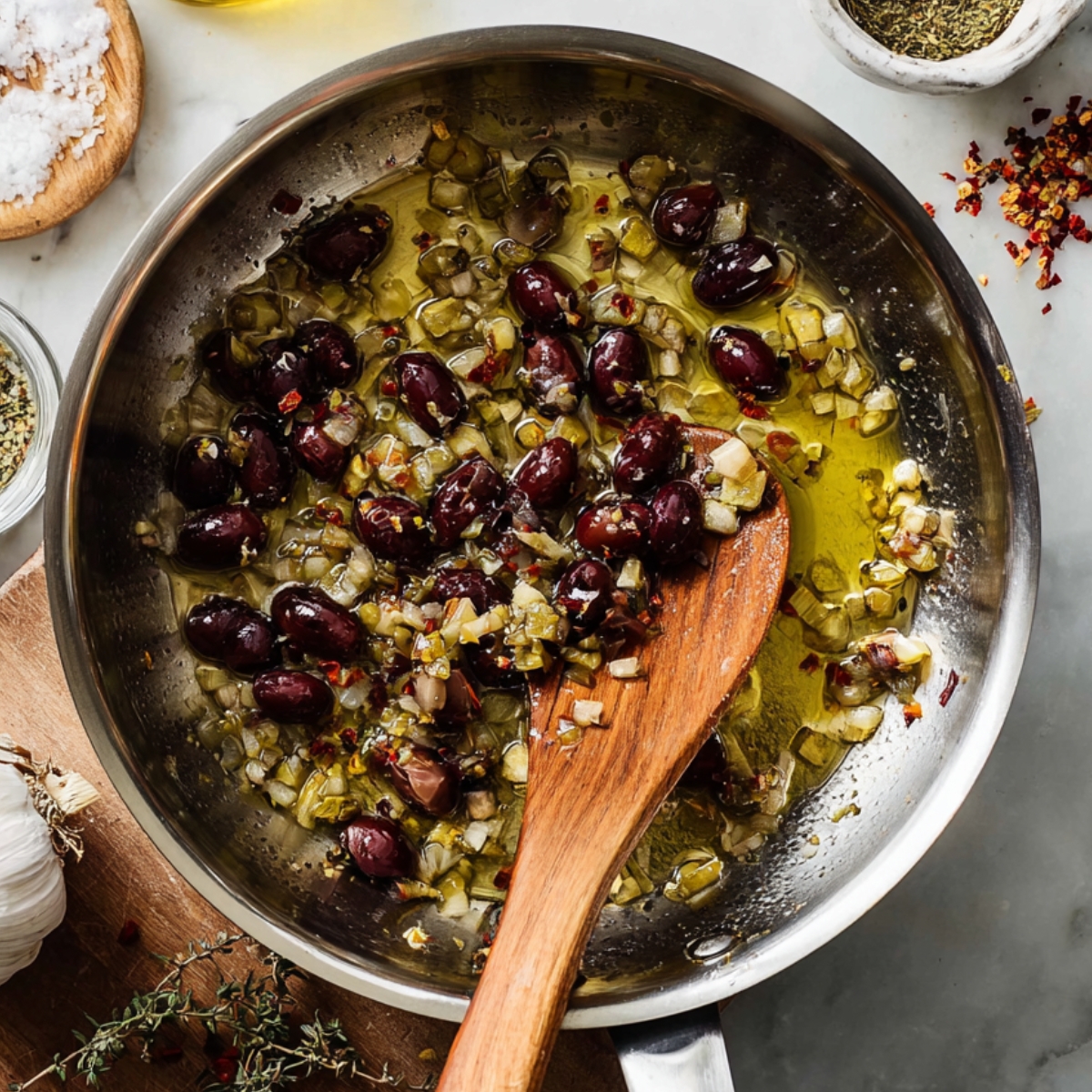
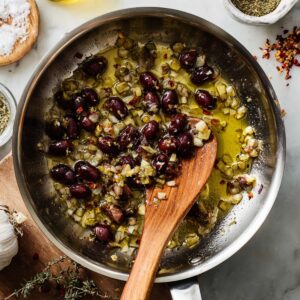
Add garlic and spices: Stir in the chopped garlic, red pepper flakes, capers, and olives. Cook for about 2 minutes, stirring often, until the garlic becomes fragrant and the flavors start to come together.
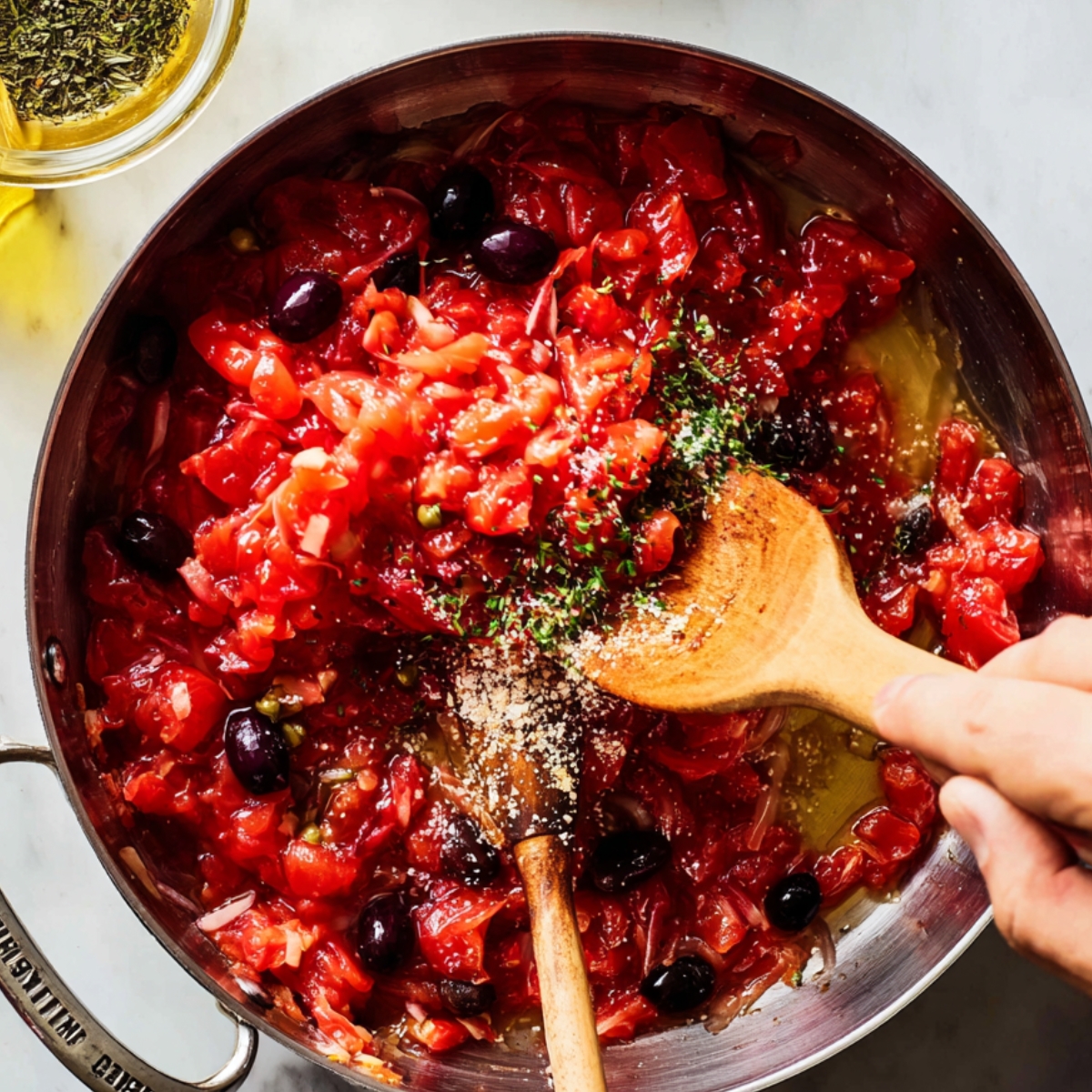
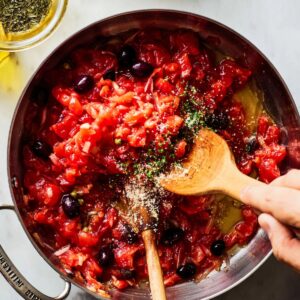
Simmer sauce: Add the crushed tomatoes to the skillet and stir everything together. Let the sauce simmer for 8 to 10 minutes, stirring occasionally, until it thickens slightly and the flavors deepen.
Cook the pasta: While the sauce simmers, bring a large pot of salted water to a boil. Cook the spaghetti according to the package directions until al dente, usually 8 to 10 minutes. Before draining, scoop out 1 cup of the starchy pasta water and set it aside.
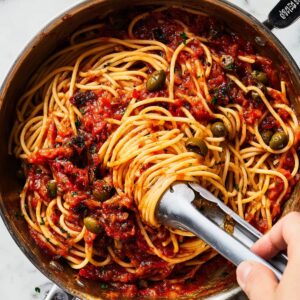
Combine pasta and sauce: Add the drained spaghetti and ½ cup of reserved pasta water to the skillet with the tomato sauce. Toss everything together over low heat for 1 to 2 minutes, adding more pasta water as needed, until the sauce coats the pasta nicely.
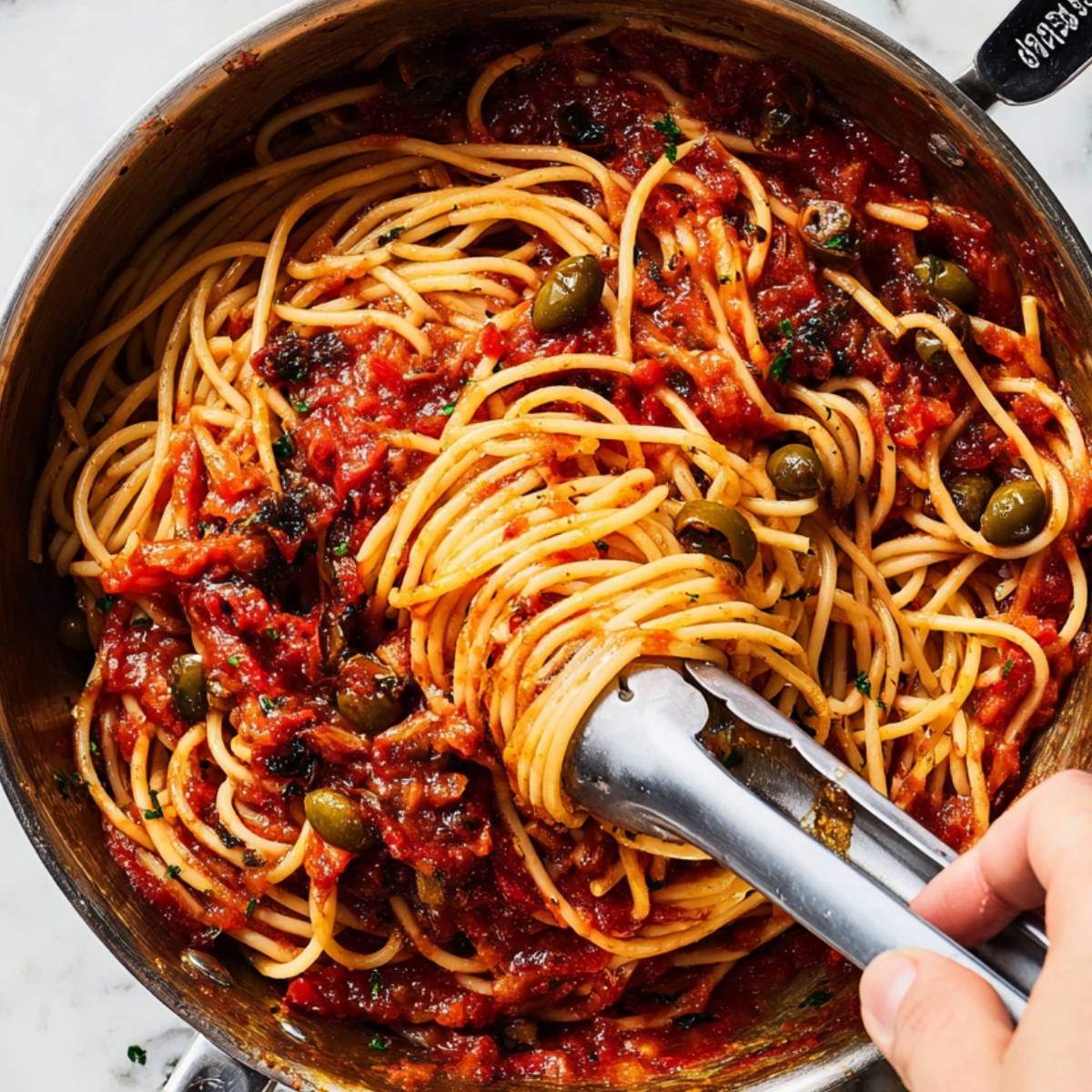
Finish and serve: Stir in the chopped parsley and toss to combine. Taste and adjust the seasoning if needed. Serve warm with extra parsley on top if you like.
Substitutions and Variations
No San Marzano tomatoes? Use any canned whole peeled tomatoes. The flavor might be slightly less sweet, but it'll still be delicious.
Skip the shallot? Swap it for half a small yellow onion or a few extra garlic cloves.
No kalamata olives? Try Castelvetrano or green olives for a milder flavor. Black olives work in a pinch, though they're less briny.
Want more protein? Stir in a can of drained tuna or a handful of cooked shrimp at the end.
Add anchovies. For a more traditional authentic pasta puttanesca, mash 3 to 4 anchovy fillets into the oil with the garlic.
Use different pasta. Linguine, bucatini, or penne all work beautifully with this sauce.
Make it spicier. Add extra red pepper flakes or a dash of cayenne.
Equipment For Pasta Puttanesca
Large skillet: A 12-inch skillet gives you enough room to toss the pasta with the sauce without making a mess.
Large pot: For boiling the pasta.
Bowl for crushing tomatoes: Any medium or large bowl works.
Colander: To drain the pasta.
Knife and chopping board: For prepping the shallot, garlic, olives, and parsley.
Storage and Reheating Tips
Refrigerate: Store leftover Pasta Puttanesca in an airtight container in the fridge for up to 3 days.
Reheat gently: Warm it in a skillet over low heat with a splash of water or olive oil to loosen the sauce. You can also microwave it in 30-second intervals, stirring in between.
Freeze the sauce: The sauce freezes well for up to 3 months. Cook fresh pasta when you're ready to serve.
Don't freeze cooked pasta: Spaghetti gets mushy when frozen. If you want to meal prep, freeze the sauce separately and cook the pasta fresh.
Serving Suggestions
With crusty bread. A slice of warm, crusty bread is perfect for soaking up the extra sauce.
Alongside a simple salad. A fresh arugula or mixed greens salad with a light vinaigrette balances the richness of the pasta. Try pairing it with Best Red Wine Vinaigrette for a tangy, restaurant-style touch.
With roasted vegetables. Roasted zucchini, bell peppers, or eggplant make great sides for this weeknight pasta dinner.
Topped with Parmesan. A light sprinkle of grated Parmesan adds a nutty, salty finish, though it's optional since the sauce is already pretty bold.
Expert Tips
Hand-crush the tomatoes. It's faster than chopping and gives the sauce a better texture.
Don't skip the pasta water. The starchy water helps the sauce cling to the spaghetti and makes everything silky.
Cook the garlic gently. Burnt garlic tastes bitter, so keep the heat at medium and stir often.
Taste before adding salt. The olives and capers are already salty, so you might not need much extra.
Use good olive oil. Since olive oil is one of the main ingredients, a good extra-virgin olive oil makes a noticeable difference.
Let the sauce simmer. Giving it 8 to 10 minutes helps the flavors come together and makes the sauce taste richer.
A Quick Kitchen Story
Last Tuesday, my best friend Ryan stopped by right as I was making this. He watched me crush the tomatoes with my hands and said, "Wait, you're not using a spoon?" I laughed and told him it's faster this way, and the sauce tastes better when the tomatoes are hand-crushed instead of chopped.
He wasn't convinced until he tried a bite. His eyes went wide. "Okay, that's actually really good. Like, restaurant good."
I grinned. "Told you."
He ended up staying for dinner, and we polished off the whole pot while talking about everything and nothing. That's the thing about Pasta Puttanesca, it brings people together without you even trying.
FAQ
What are the ingredients of Pasta Puttanesca?
Traditional Pasta Puttanesca includes tomatoes, garlic, olives, capers, anchovies, and olive oil. This version skips the anchovies but keeps all the bold, briny flavors.
What is the secret ingredient of Pasta Puttanesca?
Capers! They add a tangy, salty punch that makes puttanesca sauce taste unique. Some recipes also include anchovies for extra umami depth.
What does Pasta Puttanesca mean in Italian?
The name roughly translates to "in the style of a prostitute," a playful reference to the dish's quick preparation and bold, enticing flavors. It's been a staple of Italian pasta recipes for decades.
What can you add to puttanesca pasta?
You can add anchovies for more depth, tuna for protein, fresh basil for brightness, or extra red pepper flakes for heat. Some people also stir in a splash of white wine while the sauce simmers.
Related
Looking for other recipes like this? Try these:

Pairing
These are my favorite dishes to serve with Pasta Puttanesca
Pasta Puttanesca
Ingredients
- 1 28-ounce can whole peeled San Marzano tomatoes (Drained and crushed with hands)
- ¼ cup extra-virgin olive oil For cooking the sauce
- 1 shallot finely chopped (About ⅓ cup)
- ¼ teaspoon sea salt For seasoning
- 3 garlic cloves finely chopped (For flavor)
- ¼ teaspoon red pepper flakes For a touch of heat
- 2 tablespoons capers For briny flavor
- ½ cup pitted kalamata olives roughly chopped (For a salty tang)
- 12 ounces spaghetti pasta For the base of the dish
- ¼ cup chopped fresh parsley Plus extra for garnish
Instructions
- Crush the tomatoes in a large bowl using your hands.
- Heat olive oil in a large skillet over medium heat. Add shallot and sea salt and cook, stirring occasionally, for 4-5 minutes until softened.
-
Stir in garlic, red pepper flakes, capers, and olives. Cook for 2 minutes, stirring occasionally.

-
Add the crushed tomatoes to the skillet and cook for 8-10 minutes to develop the sauce flavors.
- While the sauce cooks, bring a large pot of salted water to a boil. Cook the pasta according to the package instructions until al dente. Reserve 1 cup of pasta water, then drain the pasta.
-
Add the cooked pasta and ½ cup of reserved pasta water to the skillet with the sauce. Toss over low heat for 1-2 minutes, adding more pasta water as needed to coat the pasta.
- Add chopped parsley to the skillet and toss everything together. Taste and adjust seasoning if necessary. Serve with extra parsley on top if desired.
Leave a Reply