
This pineapple upside down cake brings together buttery caramelized brown sugar, golden pineapple rings, and bright red cherries on top of the softest vanilla cake. I first made this for my mom's birthday years ago, and the way those pineapple slices glistened under the kitchen light still makes me smile. The best part? It's easier than it looks, and you probably have most of what you need already.

If you're in the mood for more simple, cozy desserts, try these Nutella Crinkle Cookies or these Easy Pistachio Cookie Bars for a quick treat, or go all-in with Lemon Cinnamon Rolls if you want something tangy and sweet.
Why You'll Love This Pineapple Upside Down Cake
This homemade Pineapple Upside Down Cake checks all the boxes. The cake itself is tender and light, thanks to the cake flour and sour cream. It's not too sweet, so the brown sugar topping really shines. You get that buttery Pineapple Upside Down Cake flavor in every bite, and the little pops of cherry add just the right amount of tartness.
It's also one of those recipes that looks impressive but doesn't require any fancy skills. You don't need to frost it or decorate it. The fruit does all the work for you. And if you're worried about flipping it, don't be. Just let it cool for 20 minutes, run a knife around the edge, and flip it onto a plate. It always works.
Jump to:
Pineapple Upside Down Cake Ingredients
Here's everything you'll need to make this moist Pineapple Upside Down Cake.
See Recipe Card Below This Post For Ingredient Quantities
For the Topping
Unsalted butter (melted): Creates the base for the caramelized topping. Melted butter spreads easily and helps the brown sugar dissolve into a sticky glaze.
Brown sugar: This is what gives you that deep, caramel flavor. Light or dark brown sugar both work, but dark gives you a richer taste.
Pineapple slices: Use canned pineapple rings and make sure to drain them well. Fresh pineapple works too, but canned is easier and stays tender.
Maraschino cherries: These add color and a little burst of sweetness. Blot them dry so they don't make the topping watery.
For the Cake
Cake flour: Makes the cake extra soft and tender. It has less protein than all-purpose flour, so the texture stays light.
Baking powder: Helps the cake rise and gives it a fluffy texture.
Baking soda: Works with the sour cream to add lift and balance the acidity.
Salt: Balances the sweetness and brings out the vanilla flavor.
Unsalted butter (softened): Adds richness and moisture. Make sure it's at room temperature so it creams properly with the sugar.
Granulated sugar: Sweetens the cake without overpowering the pineapple topping.
Egg whites: Keep the cake light and airy. Room temperature egg whites mix in more easily.
Sour cream: Adds moisture and a subtle tang that makes the cake taste richer.
Vanilla extract: Adds warmth and depth to the flavor.
Pineapple juice: Reinforces the pineapple flavor and keeps the cake moist. Use the juice from the canned pineapple.
Milk: Thins out the batter just enough to make it smooth and pourable.
How To Make Pineapple Upside Down Cake
Follow these steps to make your Pineapple Upside Down Cake from scratch.
Preheat oven: Preheat your oven to 350°F (177°C). This ensures even baking from the start.
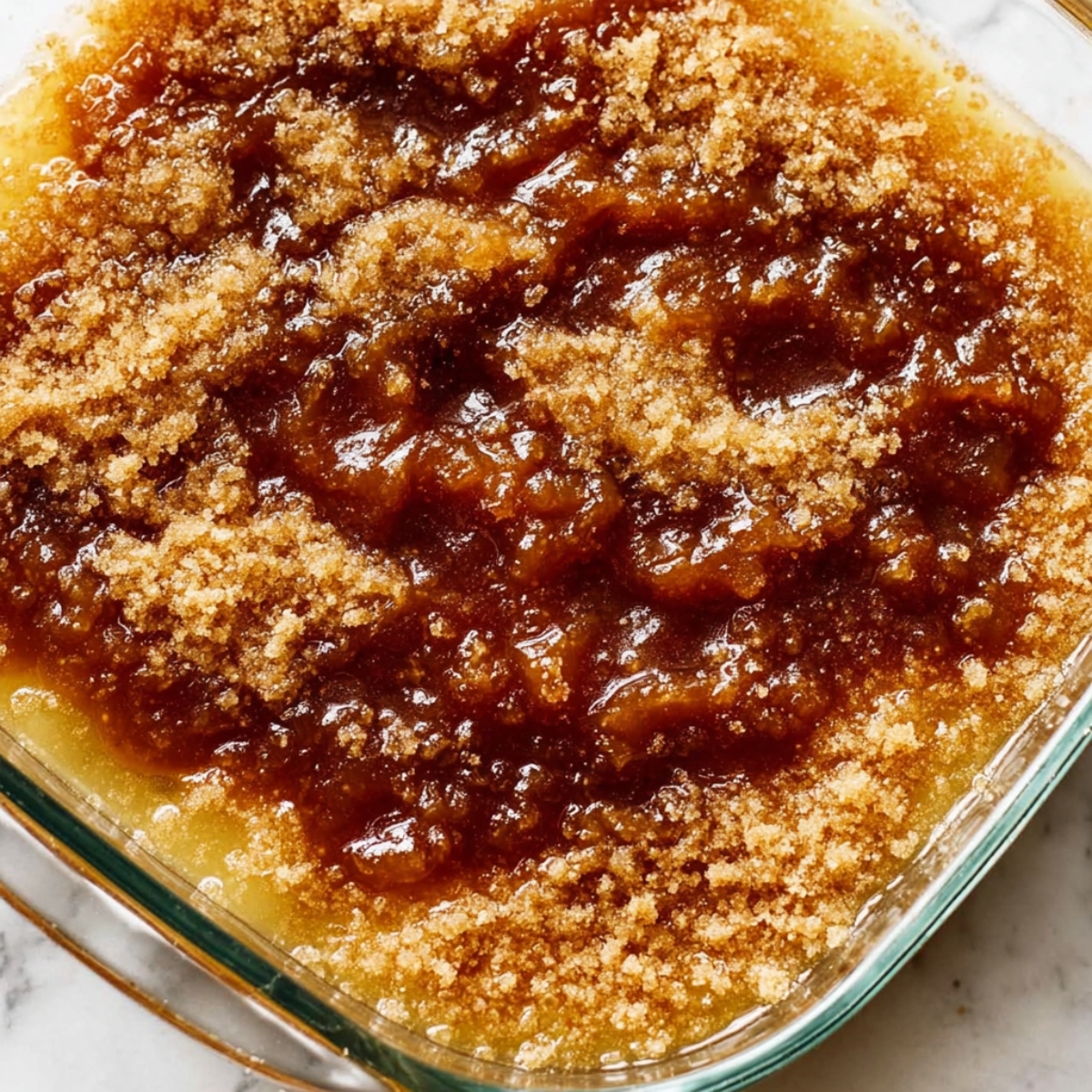
Prepare the topping: Pour the melted butter into an ungreased 9x2-inch pie dish or round cake pan. Sprinkle the brown sugar evenly over the butter. It should cover the bottom in a thin, even layer.
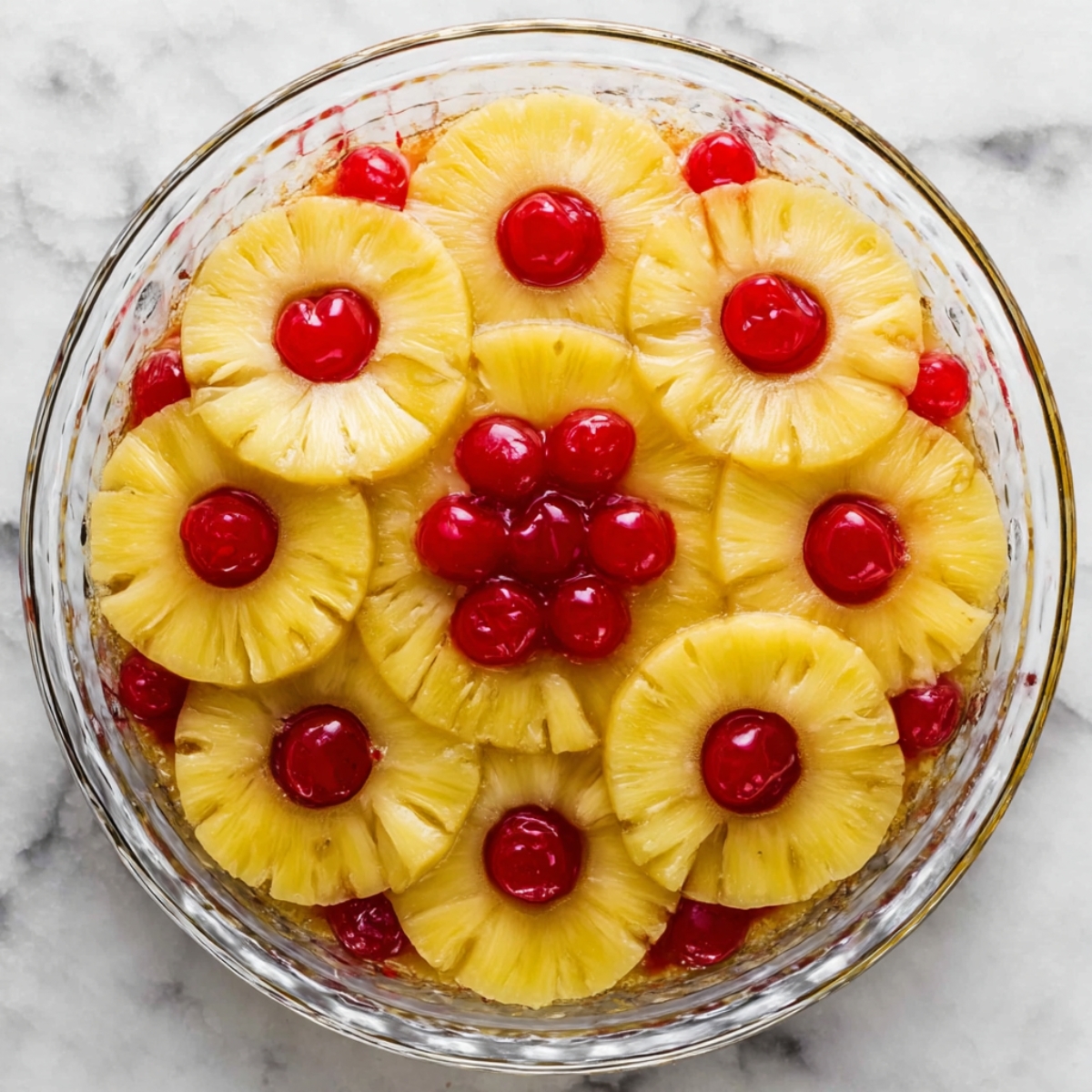
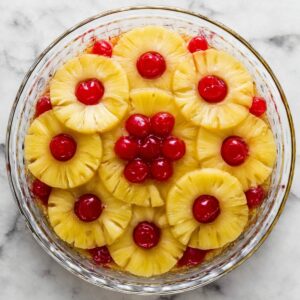
Arrange the fruit: Blot the pineapple slices and cherries with a paper towel to remove excess liquid. Arrange 6 to 7 pineapple slices over the brown sugar, then tuck a cherry into the center of each ring. If you have extra pineapple, you can halve the rings and line the edges of the pan. Pop the pan in the refrigerator while you make the batter.
Mix dry ingredients: In a medium bowl, whisk together the cake flour, baking powder, baking soda, and salt. Set this aside.
Cream butter and sugar: In a large bowl, beat the softened butter on high speed with an electric mixer until it's smooth and creamy, about 1 minute. Add the granulated sugar and beat for another minute until everything's well combined. Scrape down the sides of the bowl as needed.
Add wet ingredients: Beat in the egg whites until they're fully mixed in. Then add the sour cream and vanilla extract, beating until the mixture looks smooth and fluffy.
Combine everything: Add the dry ingredients to the wet ingredients. With the mixer on low speed, slowly pour in the pineapple juice and milk. Mix just until the batter comes together. It'll be slightly thick, and that's exactly what you want. Don't overmix or the cake will turn out dense.
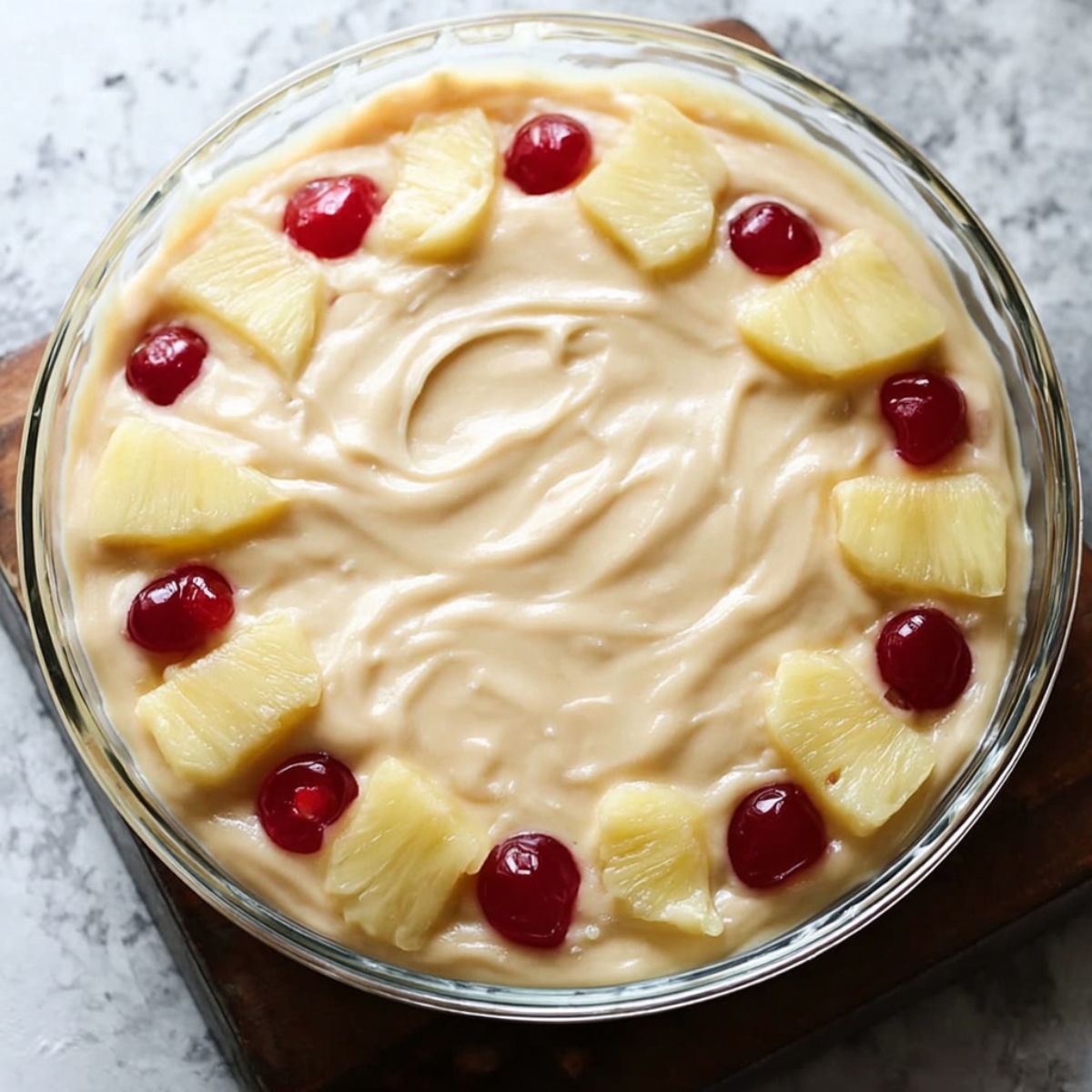
Add batter to pan: Take the pan out of the refrigerator. Pour the batter evenly over the fruit topping, spreading it gently to cover everything.
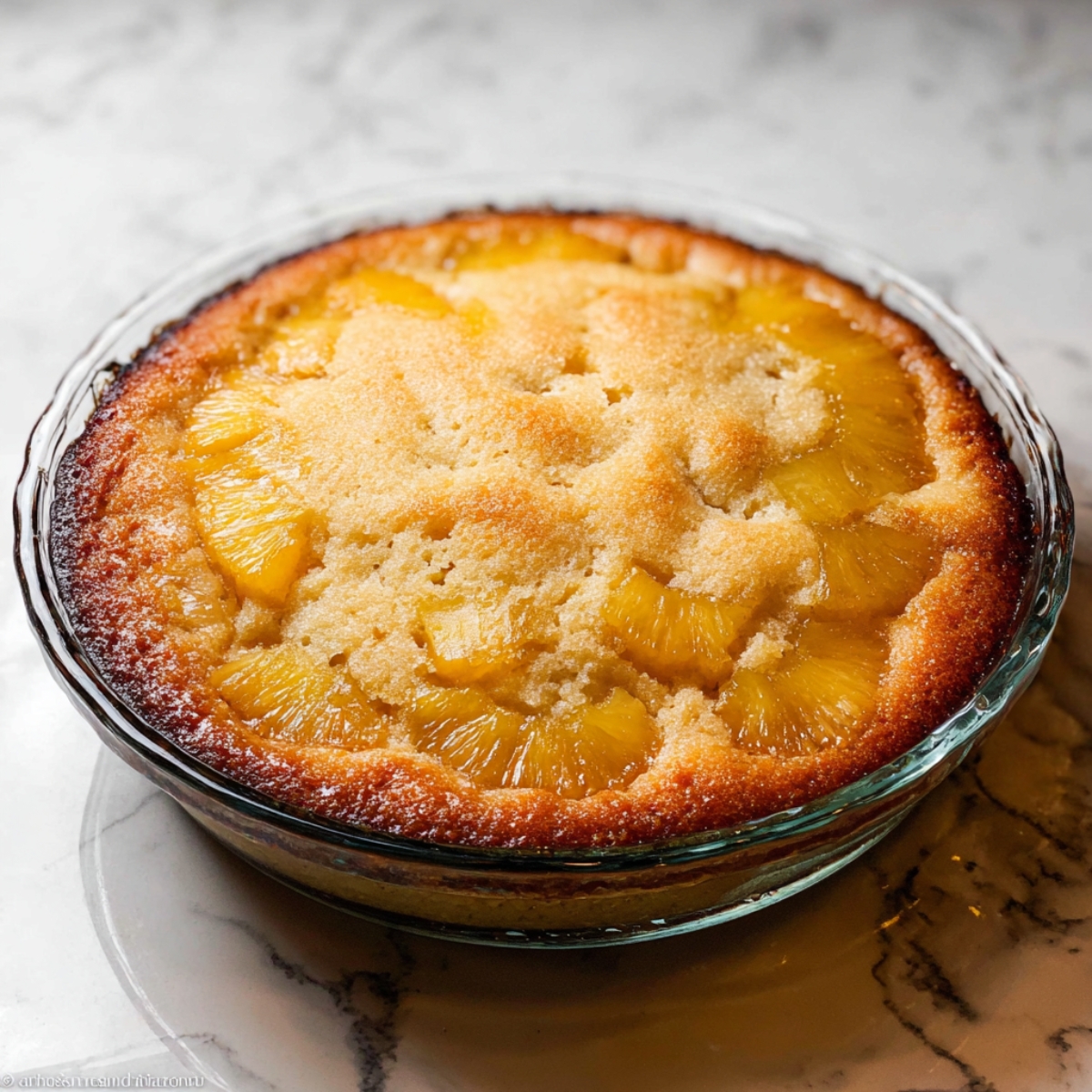
Bake: Bake for 43 to 48 minutes. Halfway through, tent a piece of aluminum foil loosely over the top to prevent the cake from browning too much. The cake is done when a toothpick inserted in the center comes out mostly clean with just a few moist crumbs.
Cool and flip: Let the cake cool on a wire rack for 20 minutes. Run a knife around the edge to loosen it, then place a serving plate over the pan and carefully flip it over. Let it sit for a minute before lifting the pan off. The topping should be glistening and golden.
Serve or store: Let the cake cool completely before slicing for the cleanest cuts. Store any leftovers covered in the refrigerator for up to 3 days, or freeze individual slices for up to 3 months.
Substitutions and Variations
Fresh pineapple: You can use fresh Pineapple Upside Down Cake instead of canned. Just slice it into rings about ½-inch thick and make sure to drain off any extra juice before arranging them in the pan.
All-purpose flour: If you don't have Pineapple Upside Down Cake flour, you can make your own. For every cup of all-purpose flour, remove 2 tablespoons and replace it with 2 tablespoons of cornstarch. Sift it a few times to lighten it up.
Buttermilk: Swap the sour cream for an equal amount of buttermilk if that's what you have. The cake will still be moist and tender.
Whole eggs: If you'd rather use whole eggs, you can use 1 large egg instead of the 2 egg whites. The texture will be slightly denser but still delicious.
Pecans or walnuts: Add a handful of chopped pecans or walnuts to the topping before adding the batter. They toast up nicely and add a little crunch.
Equipment For Pineapple Upside Down Cake
This Pineapple Upside Down Cake doesn't require anything fancy. Here's what you'll use:
- 9-inch pie dish or round cake pan: Make sure it's at least 2 inches deep so the batter doesn't overflow.
- Mixing bowls: One medium bowl for the dry ingredients and one large bowl for the wet ingredients.
- Whisk: For mixing the dry ingredients.
- Electric mixer: A handheld or stand mixer makes it easy to cream the butter and sugar.
- Rubber spatula: For scraping down the bowl and folding in the batter.
- Measuring cups and spoons: Accuracy matters in baking.
- Cooling rack: Lets air circulate under the cake while it cools.
- Aluminum foil: To tent over the cake halfway through baking.
How to Store This Pineapple Upside Down Cake
Once the Pineapple Upside Down Cake has cooled completely, cover it loosely with plastic wrap or store it in an airtight container. Keep it in the refrigerator for up to 3 days. The brown sugar topping stays soft and gooey even when chilled.
If you want to freeze it, wrap individual slices tightly in plastic wrap, then place them in a freezer-safe bag. They'll keep for up to 3 months. Thaw slices in the refrigerator overnight or let them sit at room temperature for about an hour before serving.
Expert Tips
Drain the pineapple well: Too much liquid will make the topping runny. Blot the slices dry with a paper towel before arranging them.
Don't skip the cooling time: Let the Pineapple Upside Down Cake cool for a full 20 minutes before flipping. If you flip it too soon, the topping might slide off.
Use room temperature ingredients: This helps everything mix together smoothly and gives you a lighter, fluffier cake.
Test for doneness: Insert a toothpick into the center of the cake, not near the fruit. The fruit will always be moist, so you want to test the cake itself.
Run a knife around the edge: Before flipping, run a butter knife around the inside edge of the pan to loosen any sticky spots. This makes the flip easier and cleaner.
FAQ
How long to let pineapple upside-down cake sit before flipping?
Let it cool on a wire rack for about 20 minutes. This gives the topping time to set just enough so it doesn't slide off when you flip it. If you wait too long, the topping might stick to the pan, so don't go past 25 minutes. My mom always says 20 minutes is the sweet spot, and she's right every time.
What are common pineapple cake mistakes?
The biggest mistake is not draining the Pineapple Upside Down Cake well enough. Too much juice makes the topping watery and the cake soggy. Another common issue is overmixing the batter, which makes the cake dense instead of light and fluffy. And don't forget to tent the foil halfway through baking, or the top of the cake might burn before the inside is done.
Should pineapple upside-down cake be refrigerated?
Yes, especially if you're storing it for more than a day. The brown sugar topping and the moisture from the pineapple mean it's best kept in the fridge. Just cover it loosely with plastic wrap or foil. You can eat it cold, or let it come to room temperature for about 30 minutes before serving. Some people even like it slightly warm, so a quick 10 seconds in the microwave works too.
What is the biggest mistake to avoid when making a dump cake?
The biggest mistake with Pineapple Upside Down Cake is not spreading the dry cake mix evenly over the fruit layer. If you leave clumps or gaps, some parts will be undercooked while others burn. Also, make sure to pour the melted butter evenly over the top so the whole cake bakes up golden and crispy. And don't skip the butter, even if you think it's too much. That's what makes a dump cake work.
Related
Looking for other recipes like this? Try these:




Pairing
These are my favorite dishes to serve with Pineapple Upside Down Cake



Pineapple Upside Down Cake
Ingredients
- ⅓ cup unsalted butter melted (used for topping base and richness)
- ⅔ cup brown sugar packed (adds caramel depth for topping)
- 10–12 pineapple slices blotted dry to prevent excess moisture
- 18–22 maraschino cherries stems removed and patted dry
- 1 ¾ cups cake flour spooned and leveled for light texture
- 1 ¼ teaspoons baking powder ensures proper rise
- ¼ teaspoon baking soda balances acidity
- ¾ teaspoon salt enhances overall flavor
- 7 tablespoons unsalted butter softened (provides tender crumb)
- ⅞ cup granulated sugar sweetens the batter evenly
- 3 large egg whites room temperature for smooth mixing
- ½ cup full-fat sour cream adds moisture and softness
- 1 ¼ teaspoons vanilla extract boosts aroma and flavor
- ⅓ cup pineapple juice room temperature for blending
- 3 tablespoons whole milk keeps batter fluid and tender
Instructions
- Set the oven to 350°F (177°C) and allow it to fully preheat.
-
Pour the melted butter into the bottom of an ungreased round cake pan and tilt to coat evenly, then sprinkle the brown sugar over the butter in an even layer.

-
Gently pat the pineapple slices and cherries dry, then arrange them decoratively over the sugar layer, pressing lightly so they stay in place.
- Place the prepared pan in the refrigerator briefly while the batter is prepared to help firm the topping.
- In a bowl, whisk together the cake flour, baking powder, baking soda, and salt until evenly combined.
- Using a mixer, beat the softened butter until creamy, then add the granulated sugar and beat until light and fluffy, scraping the bowl as needed.
- Mix in the egg whites until incorporated, followed by the sour cream and vanilla, blending until smooth.
- Add the dry ingredients to the bowl, then mix on low speed while slowly pouring in the pineapple juice and milk, stopping once just combined.
-
Remove the pan from the refrigerator and gently spread the batter evenly over the fruit layer.
- Bake the cake, loosely tenting with foil halfway through, until a toothpick inserted in the center comes out with a few moist crumbs.
-
Allow the cake to cool on a rack for about 20 minutes, then carefully invert onto a serving plate.
- Let the cake cool completely before slicing for the cleanest presentation.



Leave a Reply