
Last summer, Emma discovered dried mango at a friend's house and became obsessed, asking me to buy it constantly at the grocery store where those tiny packages cost six dollars and disappeared in two days. I finally decided to make dehydrated mango at home using our food dehydrator, figuring it couldn't be that complicated. Eight hours later, we had trays of chewy, intensely sweet mango slices that tasted better than store-bought for a fraction of the cost.
The slow dehydration process concentrates natural sugars and creates the most addictive dried tropical fruit that's healthier than candy but satisfies sweet cravings completely. Whether you need healthy portable snacks or want to preserve abundant fresh mango, this homemade dried mango delivers superior quality with simple technique.
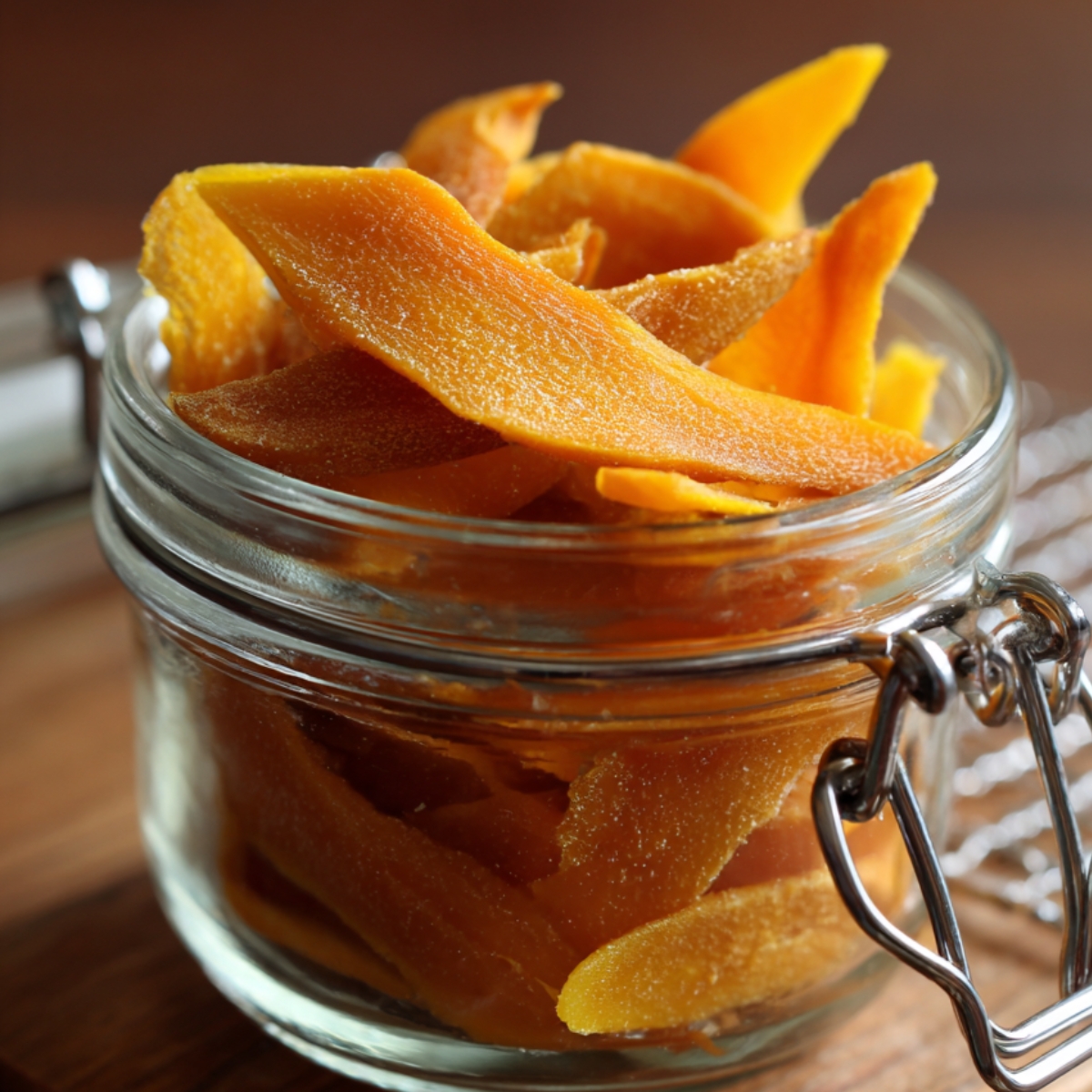

Why You'll Love This Dehydrated Mango
This mango dehydrator recipe has rescued countless snack emergencies when Emma needed portable food for basketball practice, long car trips, or school lunches where fresh fruit wouldn't survive. The dried mango slices are lightweight, non-perishable, and pack concentrated nutrition into grab-and-go snacks that need no refrigeration. I love that this method uses just one ingredient – fresh mango – with no added sugar, preservatives, or artificial colors that plague commercial dried fruit. The chewy texture satisfies candy cravings while providing actual vitamins, fiber, and minerals instead of empty calories.
What really wins me over is how this solves the problem of mangoes ripening all at once faster than we can eat them fresh. Buy mangoes on sale when they're abundant and affordable, then preserve them for months of snacking rather than watching expensive fruit spoil. The finished mango chips keep for 6-12 months stored properly, providing healthy snacks that cost pennies per serving compared to six-dollar store packages. When Emma's coach praised his improved practice energy, explaining "just homemade dried mango instead of granola bars" made me realize quality ingredients genuinely impact performance.
Jump to:
- Why You'll Love This Dehydrated Mango
- Ingredients You'll Need For Dehydrated Mango
- How To Make Dehydrated Mango Step By Step
- Smart Swaps for Your Dehydrated Mango
- Dehydrated Mango Variations
- Equipment For Dehydrated Mango
- Storing Your Dehydrated Mango
- Top Tip
- Auntie's Little-Known Secret That Transformed My Kitchen
- FAQ
- Naturally Sweet Perfection!
- Related
- Pairing
- Dehydrated Mango
Ingredients You'll Need For Dehydrated Mango
Basic Recipe:
- 4-5 ripe mangoes
- Optional: lime juice for treating
For Spiced Version:
- Basic ingredients above
- Tajín seasoning
- OR cinnamon sugar
- OR just sea salt
Choosing Mangoes:
- Slightly firm but ripe
- Ataulfo/Champagne mangoes
- Kent or Keitt mangoes
- Tommy Atkins
Optional Flavor Variations:
- Vanilla extract spray
- Lime zest
- Chili powder
- Coconut sugar
See recipe card for quantities.
How To Make Dehydrated Mango Step By Step
Select and Prepare Mangoes:
Choose ripe but slightly firm mangoes so they slice cleanly and don’t get overly sticky when dried. Wash them well to avoid transferring dirt or bacteria when cutting. Peel completely, since the skin doesn’t dehydrate well. Cut the flesh off the flat pit by slicing off the two large “cheeks,” then cut into cubes or strips whichever is easier for you.
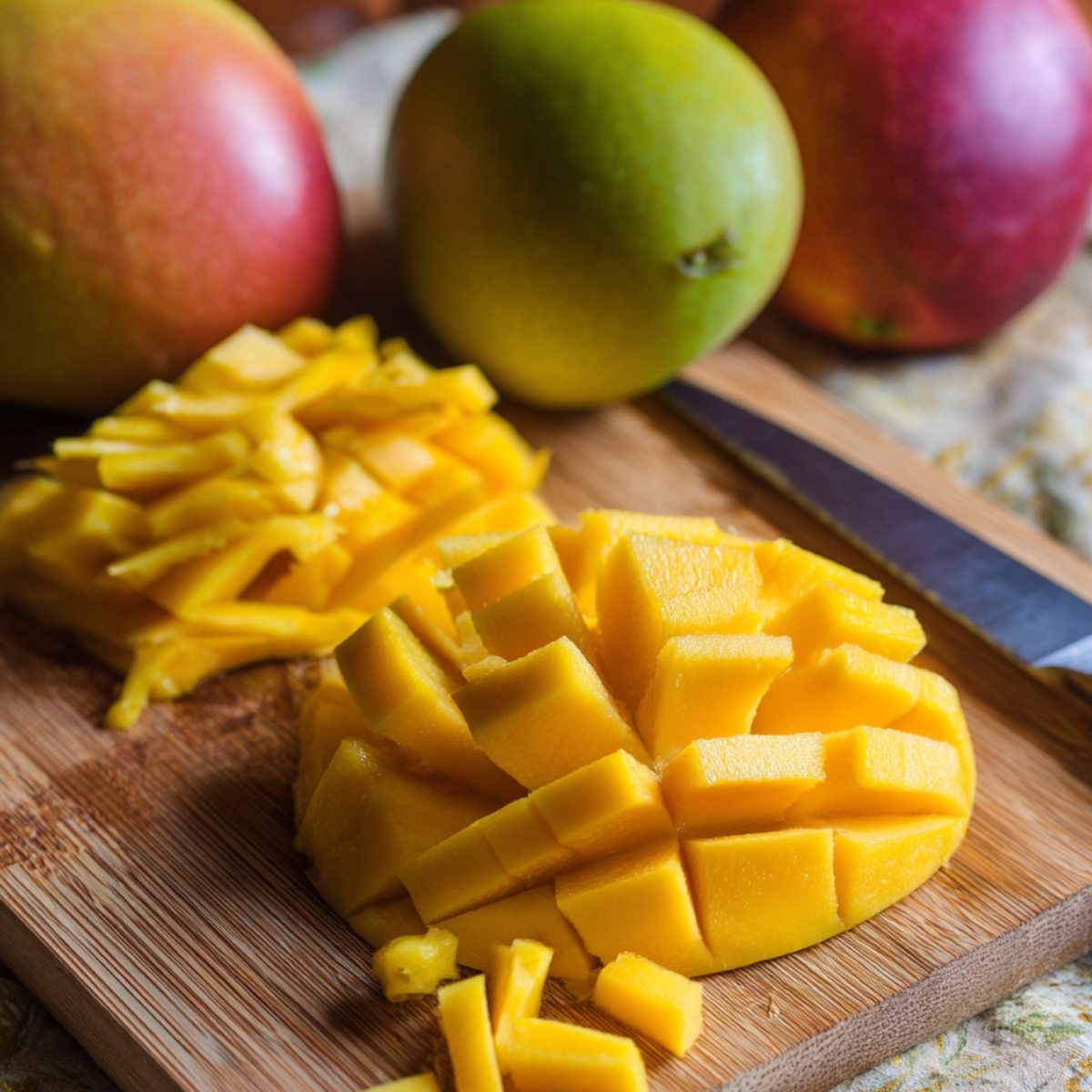
Slice Uniformly:
Slice the mango about ¼ inch thick thin slices get brittle, while thicker ones dry too slowly and may trap moisture. Use a sharp knife and keep the slices uniform so they dehydrate evenly. If you want to prevent browning (optional), briefly dip the slices in diluted lemon or lime juice, though mango usually keeps its color well.
Arrange on Dehydrator Trays:
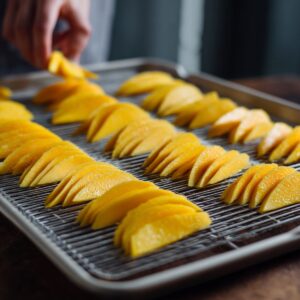
Arrange the mango slices on dehydrator trays in a single layer with space between each piece so they dry evenly and don’t stick together. Leave about ½ inch of airflow around them. If using solid trays, lightly oil or line them with parchment to prevent sticking. Try to load each tray with slices of similar thickness so they finish drying at the same time.
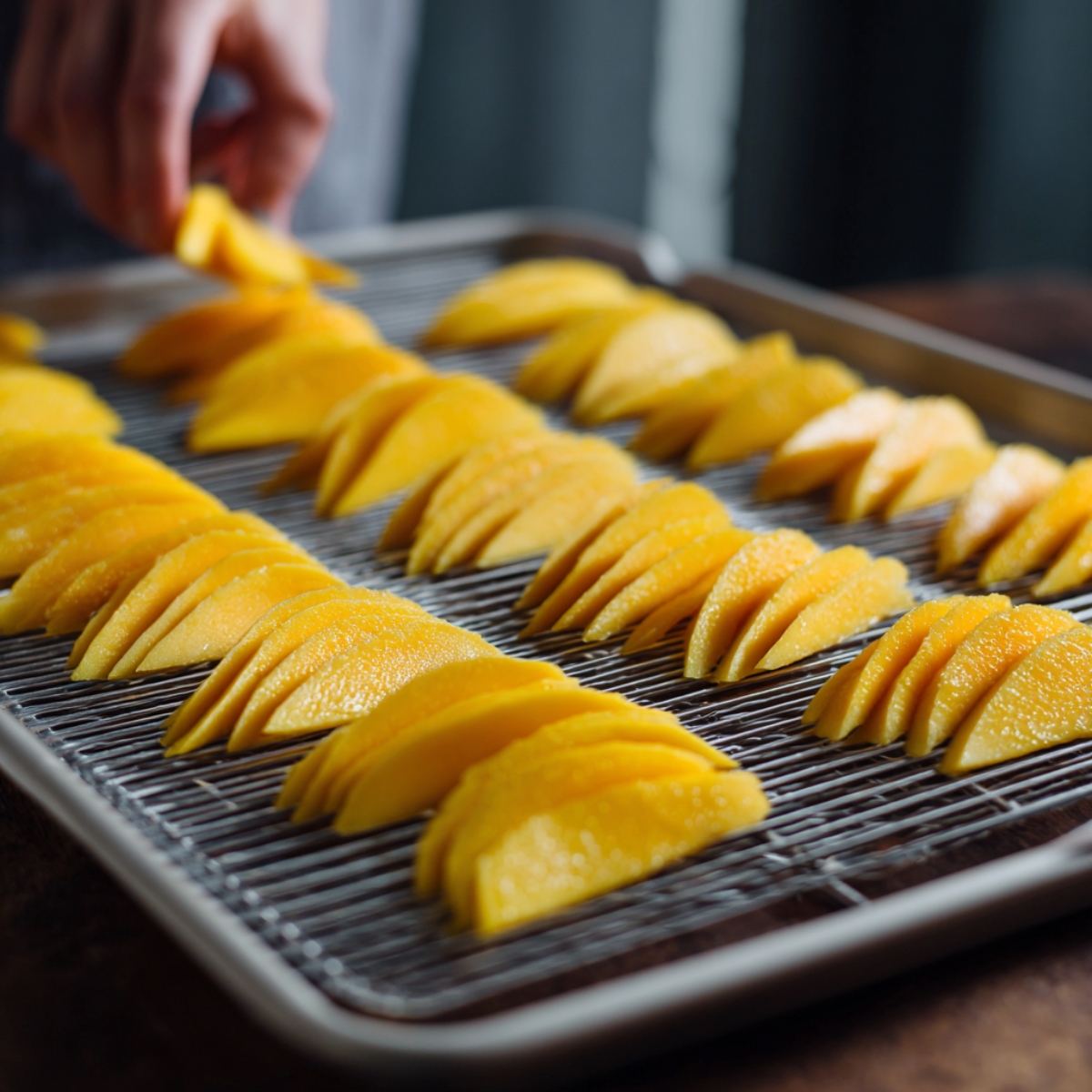
Dehydrate Until Chewy:
Set your dehydrator to 135°F and dry the mango slices for 8–12 hours until they’re leathery, pliable, and no longer sticky. Drying time varies based on thickness, moisture, humidity, and your dehydrator, so start checking around the 8-hour mark. Properly dried mango should bend without breaking and shouldn’t feel tacky. Leave them longer for a chewier, jerky-like texture or less time for softer pieces.
Cool and Condition:
Remove the dried mango from the trays while still slightly warm and transfer to a cooling rack for 30–60 minutes. Once cooled, place all pieces in a jar or container and shake it once a day for one week to “condition” them, helping moisture distribute evenly. If you notice any condensation inside the jar during this time, return the mango to the dehydrator for another hour or two.
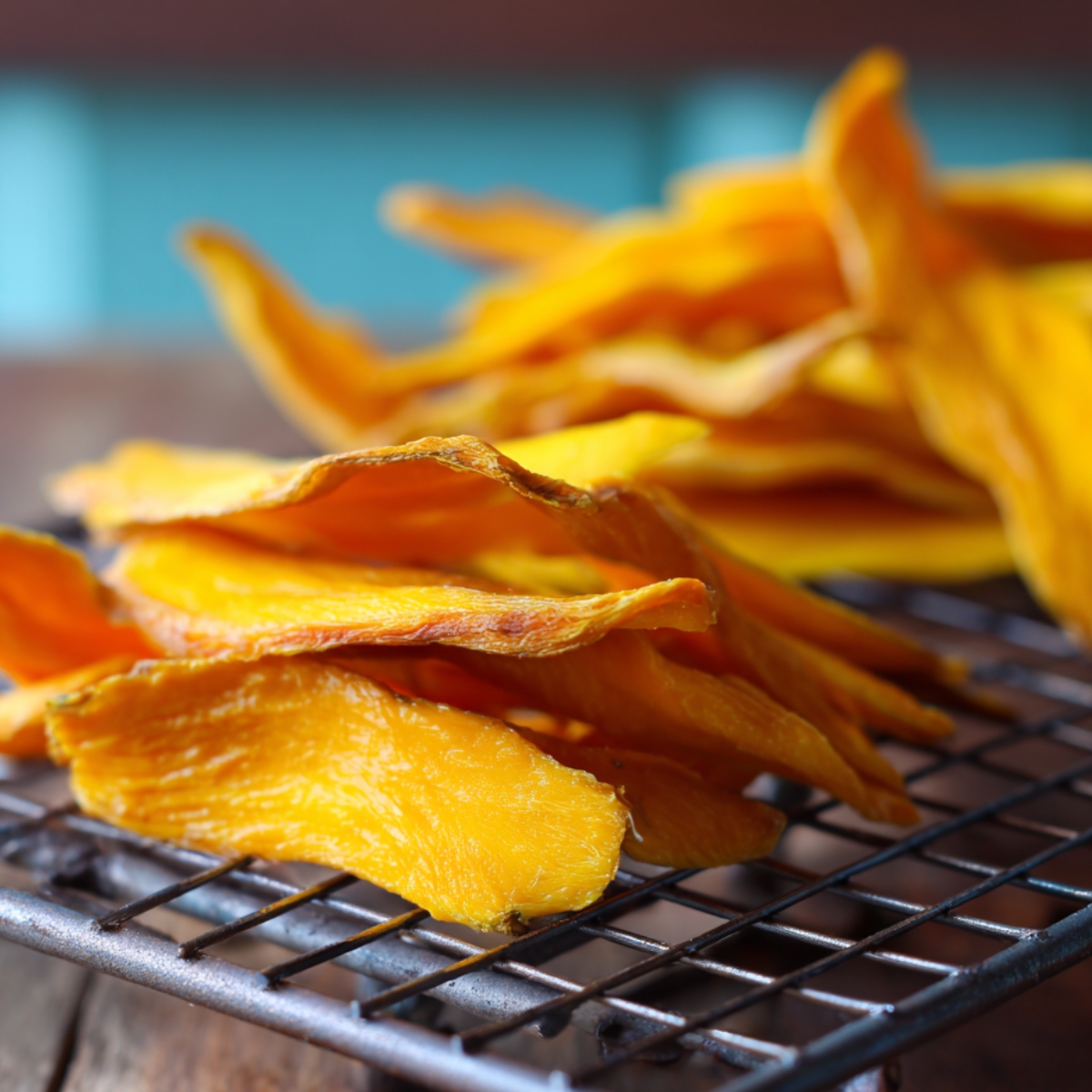
Store Properly:
After conditioning, transfer dried mango to airtight containers or vacuum-sealed bags for long-term storage in a cool, dark pantry. Properly dried and stored mango lasts 6-12 months at room temperature, though it never lasts that long in our house because we eat it too quickly. For even longer storage, refrigerate or freeze in sealed containers where it keeps for years, though texture may become slightly harder when very cold.
Smart Swaps for Your Dehydrated Mango
Different Fruits:
- Pineapple → Mango (more acidic)
- Papaya → Mango (similar texture)
- Peaches → Mango (seasonal alternative)
- Strawberries → Mango (different process)
Equipment Options:
- Oven at 170°F → Dehydrator (longer, less even)
- Air fryer at 135°F → Dehydrator (smaller batches)
- Solar dehydrator → Electric (free energy)
Seasoning Variations:
- Nothing → Seasoned (pure mango)
- Cinnamon sugar → Plain (sweet spice)
- Chili powder only → Tajín (pure heat)
- Coconut flakes → Plain (tropical)
Dehydrated Mango Variations
Spicy Mango:
- Dehydrated mango with tajin
- Extra lime juice
- Chili-lime perfection
- Mexican snack classic
Sweet Cinnamon:
- Cinnamon sugar coating
- Vanilla extract spray
- Dessert-like
- Kids favorite
Coconut Mango:
- Roll in coconut flakes before drying
- Tropical paradise
- Chewy texture
- Beach vibes
Savory Salt:
- Sea salt flakes
- Black pepper
- Unexpected savory
- Balanced sweetness
Equipment For Dehydrated Mango
- Food dehydrator (recommended)
- OR oven with low temperature
- OR air fryer
- Sharp knife for slicing
- Cutting board
Storing Your Dehydrated Mango
Room Temperature (6-12 months):
- Airtight containers in pantry
- Cool, dark, dry location
- Check monthly for moisture
- Longest shelf life properly dried
Refrigerator (12+ months):
- Extra insurance against spoilage
- Stays softer, more pliable
- Good for humid climates
- Less convenient access
Freezer (Years):
- Takes space
- Virtually indefinite storage
- Maintains quality perfectly
- Vacuum seal for best results
Top Tip
- The key to perfect dehydrated mango is slicing uniformly at ¼ inch thickness so all pieces finish drying simultaneously. Test for proper dryness by folding a cooled piece in half – it should bend without breaking or showing moisture, feeling leathery and pliable rather than tacky. Don't skip the conditioning period where you jar all dried mango together and shake daily for a week before storage, which redistributes remaining moisture and prevents mold. Properly dried and conditioned mango keeps for 6-12 months, while under-dried fruit develops mold within days.
Auntie's Little-Known Secret That Transformed My Kitchen
My aunt has been making dehydrated mango for her family for nearly twenty years, and every single time we visited her house, she'd have jars of the most incredible dried fruit sitting on her counter – perfectly chewy, never too hard or too sticky, with this gorgeous translucent golden color that my batches never quite achieved even though I followed what seemed like the exact same process. Whenever I asked what made hers so consistently perfect while mine varied wildly from batch to batch, she'd smile and say something vague like "oh, I just slice them and put them in the dehydrator" which I knew was leaving out some crucial detail that explained the superior quality.
For three years, I made dried mango regularly with inconsistent results – sometimes it came out perfect, other times it was too hard and brittle, occasionally it stayed too sticky and developed mold within weeks despite what seemed like adequate drying time. I couldn't figure out what variable I was missing that would guarantee consistent success instead of this frustrating lottery where I never knew if a batch would turn out right until days later when it either kept perfectly or spoiled unexpectedly.
FAQ
Is dehydrated mango good for you?
Yes, dehydrated mango is nutritious and provides concentrated vitamins A and C, fiber, and natural energy. However, dehydration also concentrates sugars and calories – one cup dried contains about 510 calories versus 100 for fresh. It's healthy in moderation as part of a balanced diet. Choose unsulfured, no-sugar-added versions or make your own to avoid additives.
How do you dehydrate mangos?
Peel and slice mangos into ¼ inch pieces. Arrange in single layers on dehydrator trays and dry at 135°F for 8-12 hours until leathery and pliable. Alternatively, use an oven at 170°F with the door propped open for 6-8 hours, or an air fryer at 135°F for 3-4 hours. The mango is done when it bends without breaking and leaves no moisture on fingers.
Can you dehydrate mango in an air fryer?
Yes, arrange ¼ inch mango slices in a single layer in the basket. Set to 135°F (or lowest setting) and dehydrate for 3-4 hours, checking hourly. Air fryers hold less than dehydrators (1-2 mangoes versus 4-5) and work best for small batches. The concentrated airflow can over-dry edges while centers stay moist, so monitor closely.
What does dehydrated mango taste like?
Dehydrated mango tastes like concentrated, intensely sweet mango with chewy, candy-like texture. The process concentrates natural sugars, creating more intense sweetness than fresh mango while maintaining the tropical, slightly floral flavor. The texture is leathery and chewy, similar to dried apricots. Homemade tastes fresher than commercial versions.
Naturally Sweet Perfection!
Now you have all the secrets to creating this incredible dehydrated mango that proves healthy snacks don't require premium prices, fancy brands, or accepting inferior quality from commercial products that prioritize shelf life and profit margins over actual taste and nutrition. From the air fryer finishing trick that cuts hours off drying time to the vanilla-lime enhancement that adds unexpected depth, this recipe shows that the best snacks are often the simplest – just quality fruit treated with patience and proper technique rather than loaded with preservatives, sulfites, and added sugars that mask inferior ingredients.
Want more dehydrated snacks? Our Healthy Salsa Macha Recipe offer a burst of summer sweetness in every bite, giving you that juicy berry flavor no matter the season. If you're looking for something fun and portable, our Best Air Fryer Baked Potato Recipe delivers smooth, concentrated fruit goodness that’s perfect for on-the-go snacking, lunchboxes, or quick energy boosts. Prefer a savory option? Our The Best Baked Salmon Recipe provide a light, crunchy texture with a naturally earthy flavor, making them a nutritious alternative to traditional chips.
Made this dehydrated mango? We love seeing your chewy, golden slices.
Rate this Dehydrated Mango! Your ratings help others discover this money-saving method that produces better quality than store-bought.
Related
Looking for other recipes like this? Try these:




Pairing
These are my favorite dishes to serve with Dehydrated Mango




Dehydrated Mango
Equipment
- 1 Food dehydrator (Best results for even drying)
- 1 Sharp knife (For clean, uniform slices)
- 1 Cutting board
- Optional Mandoline (For perfectly even slices)
- Optional Parchment paper or tray liners (Prevent sticking)
- 1 Airtight container or jar (For conditioning + storage)
Ingredients
- 4–5 whole Mangoes ripe but firm - Ataulfo, Kent, Keitt, or Tommy Atkins
- Optional — Lime juice - Prevents browning
- Optional — Tajín - For spicy variation
- Optional — Cinnamon sugar - For sweet variation
- Optional — Coconut flakes - For tropical variation
Instructions
-
Wash, peel, and remove mango flesh from the pit; choose ripe but firm mangoes.

-
Cut mango into uniform ¼-inch slices for even drying.
- Lay slices in a single layer on dehydrator trays with airflow between pieces.
-
Dry at 135°F for 8–12 hours until leathery, pliable, and not sticky.
-
Cool, condition in a jar for a week, then store airtight for 6–12 months.







Leave a Reply