
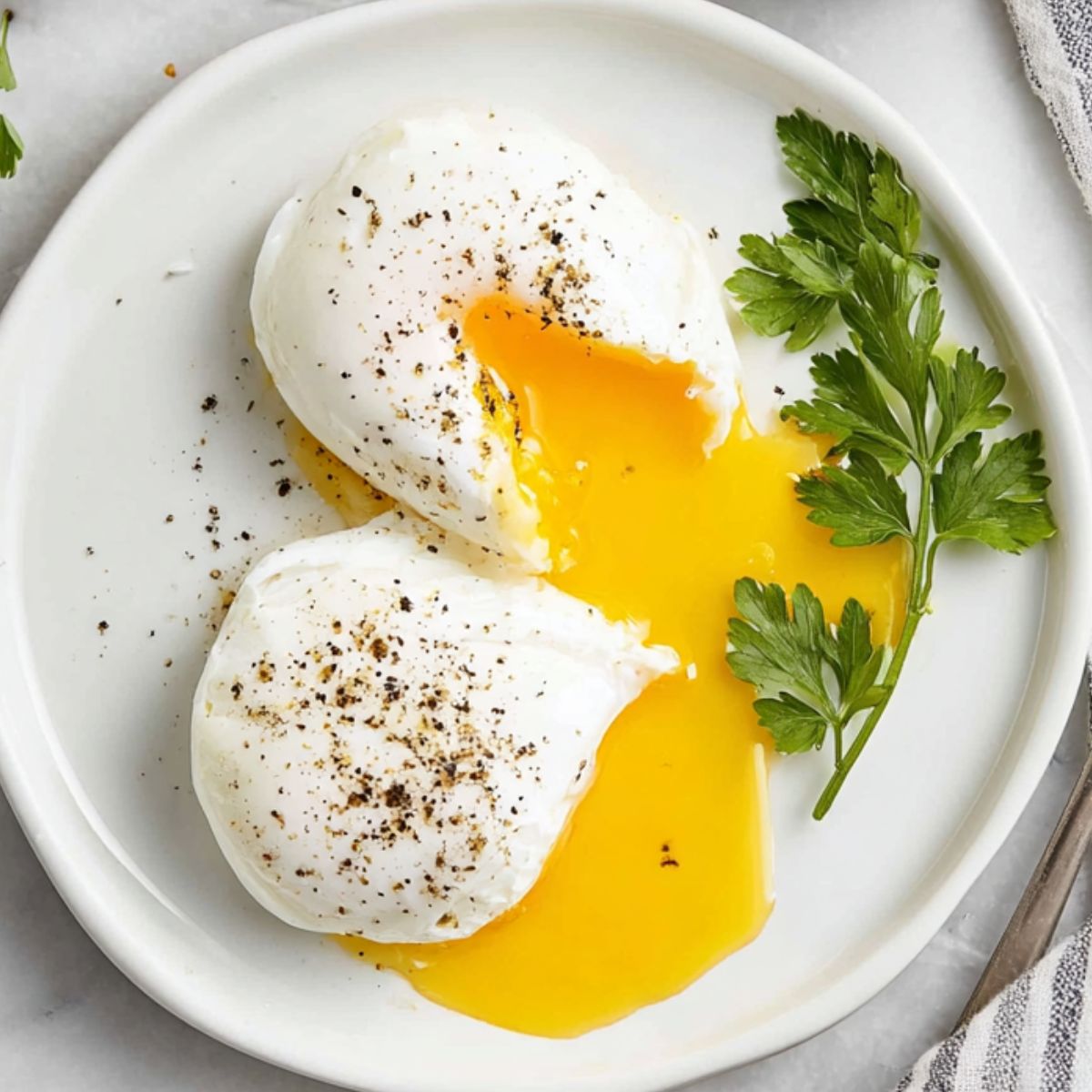
There's a quiet satisfaction in cracking an egg into simmering water and watching the whites bloom into delicate clouds around a golden yolk. I learned to make poached eggs from my mom on a lazy Sunday morning when I was helping her prep for brunch, and now it's become my go-to for everything from breakfast toast to fancy eggs benedict. The technique is surprisingly simple once you understand the gentle swirl method, and it works beautifully whether you're making one egg or a whole batch.

If you love starting your day with protein-packed breakfasts, you might also enjoy my Delicious Creamy Grits Recipe or these Healthy Deviled Potatoes Recipe for a complete spread.
Poached eggs might look fancy, but they're easier than you think. Once you nail the water temperature and that little vinegar trick, you'll have restaurant-quality eggs with soft, runny yolks every single time.
Why You'll Love This Poached Eggs
Quick and elegant. You can have a perfectly cooked egg on your plate in under 10 minutes, and it looks like something from a brunch cafe.
Simple ingredients. Just eggs, vinegar, and water. No butter, no oil, no fuss.
Healthy and light. At only 74 calories per egg, this is a protein-rich option that fits into almost any eating plan.
Versatile. These classic poached eggs work on toast, over salads, on grain bowls, or as the star of eggs benedict.
Jump to:
Ingredients For Poached Eggs
Here's everything you need to make one perfect egg.
See Recipe Card Below This Post For Ingredient Quantities
- Large egg: The star of the show. Fresh eggs work best because the whites hold together more tightly.
- White vinegar: Helps the egg whites coagulate quickly so they don't spread out in wispy strands. You won't taste it in the finished egg.
How To Make Poached Eggs
This method gives you easy poached eggs with minimal effort and maximum results.
Fill the pot: Fill a medium pot with about 4 inches of water and bring it to a gentle boil over medium-high heat.
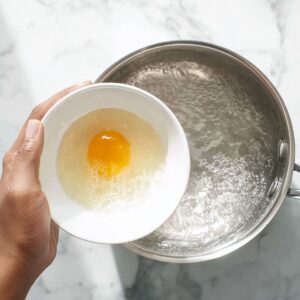
Prep the egg: While the water heats, crack one egg into a small ramekin or bowl. This makes it easier to slide the egg gently into the water without breaking the yolk.
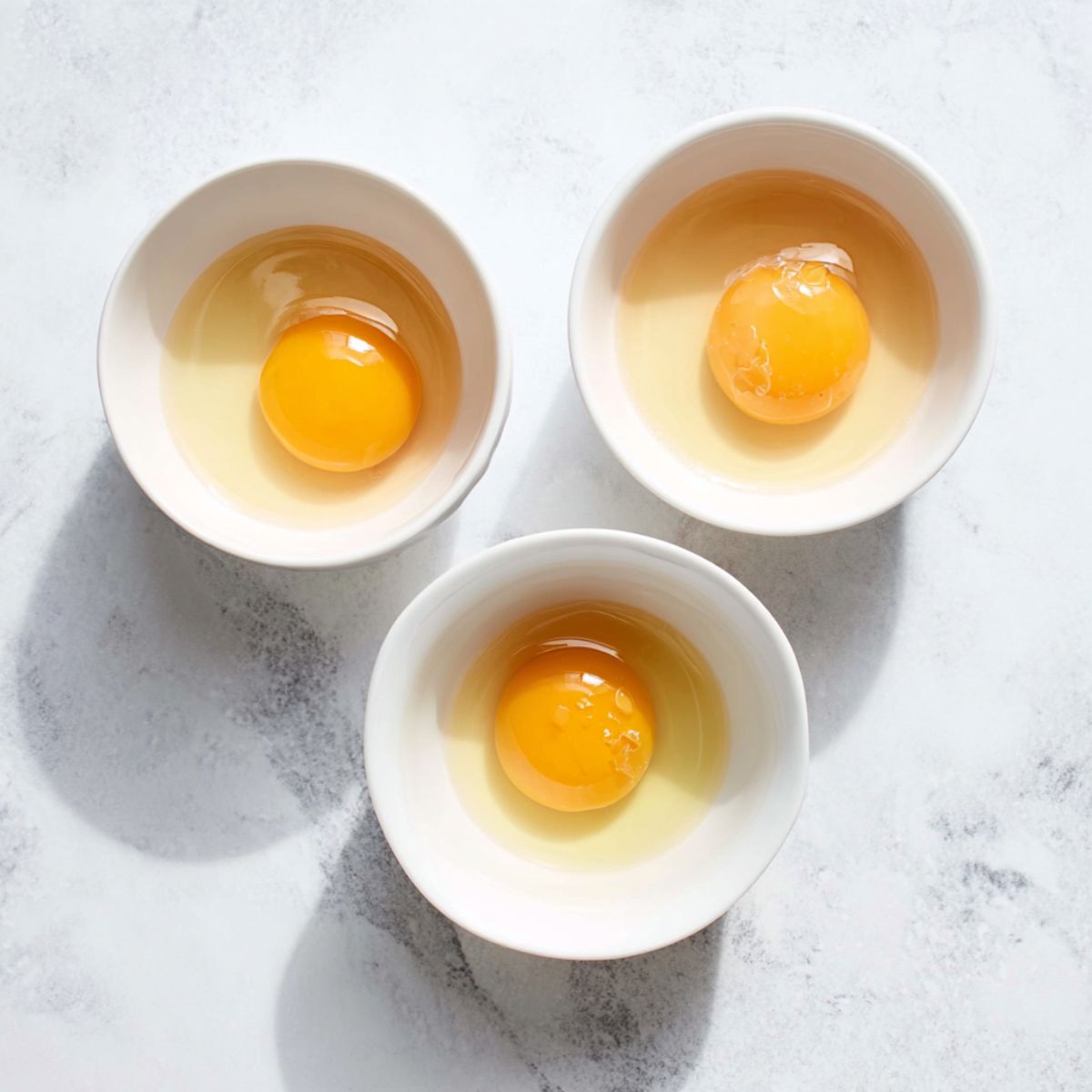
Add vinegar and reduce heat: Once the water reaches a gentle boil, turn the heat down to medium-low so it's just simmering. Add the white vinegar and stir it in.
Create the vortex: Use a spoon to stir the water in a circular motion, creating a gentle whirlpool in the center of the pot. This helps the egg whites wrap around the yolk.
Add the egg: Quickly but gently slide the egg from the ramekin into the center of the swirling water. The motion will pull the whites into a neat shape.
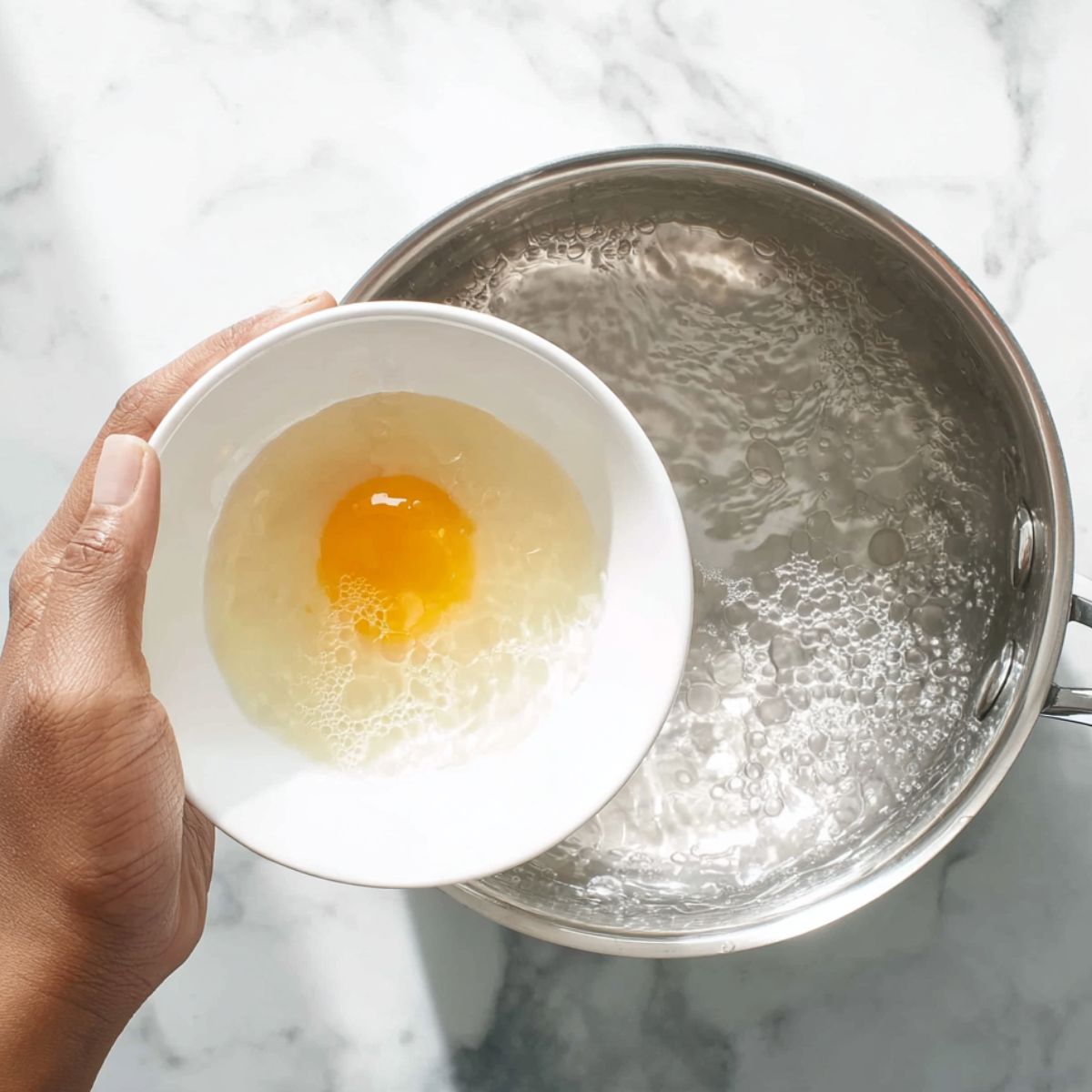
Cook and time it: Let the egg cook undisturbed for 3 minutes 30 seconds to 4 minutes, depending on how runny you like your yolk. Use a timer so you don't overcook it.
Remove and drain: Gently lift the egg out with a slotted spoon, letting the water drip off. Dab the bottom of the spoon on a paper towel to remove excess water.
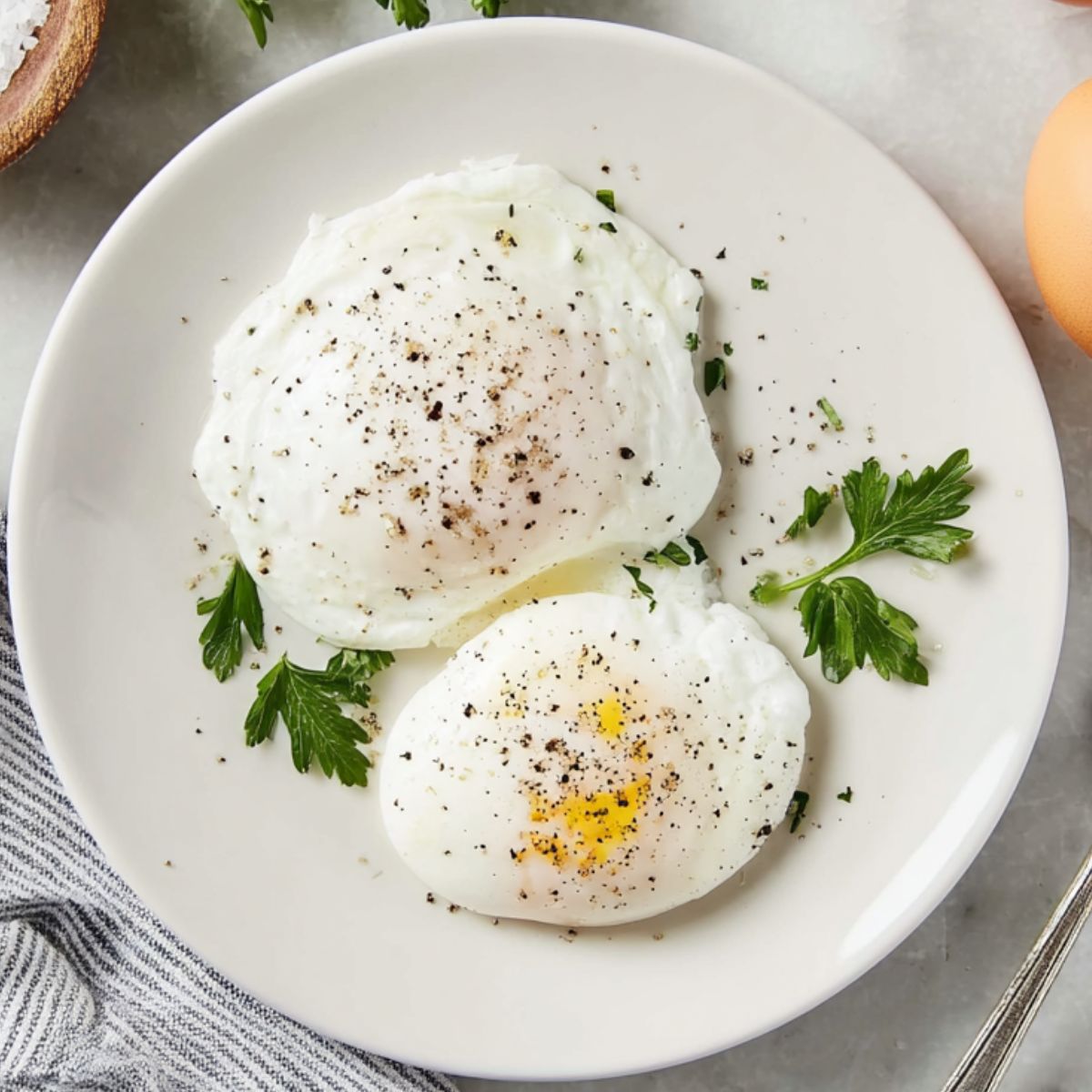
Season and serve: Place the egg on your toast, salad, or bowl, and sprinkle with salt and freshly cracked black pepper. Serve immediately while it's still warm.
Substitutions and Variations
No white vinegar? You can use apple cider vinegar or even lemon juice. The acid is what matters.
Multiple eggs: Poach them one at a time for the best results, or use a larger pot and poach two at once if you're comfortable managing them.
Firmer yolk: Cook for 5 minutes instead of 4 if you prefer a yolk that's less runny.
No ramekin? A small cup or measuring cup works just as well.
Equipment For Poached Eggs
You don't need anything fancy for this healthy Poached Eggs breakfast.
- Medium pot: Big enough to hold 4 inches of water with room for the egg to move.
- Small ramekin or bowl: Makes it easier to slide the egg in gently.
- Spoon for stirring: Any regular spoon works for creating the vortex.
- Slotted spoon: Essential for lifting the egg out without breaking it.
- Timer: Helps you nail the perfect doneness every time.
- Paper towel: For blotting off excess water before serving.
How to Store Poached Eggs
Refrigerator: You can poach eggs ahead and store them in a bowl of cold water in the fridge for up to 2 days. When you're ready to eat, reheat them by dipping in warm (not boiling) water for about 30 seconds.
Freezing: Not recommended. The texture changes too much once frozen.
Reheating tip: Never microwave a poached egg unless you want a rubbery result. Always use warm water to gently bring it back to temperature.
Serving Suggestions
On toast: The classic. Use thick-cut sourdough or whole grain bread, add a smear of avocado, and top with your poached egg on toast.
Eggs benedict style: Place the egg on an English muffin with Canadian bacon and drizzle with hollandaise sauce for a restaurant-worthy brunch.
Over grains: Set a runny yolk egg on top of quinoa, farro, or my Delicious Creamy Grits Recipe for a hearty breakfast bowl.
Salad topper: Add it to a bed of greens with roasted vegetables and a light vinaigrette. The yolk becomes a built-in creamy dressing.
Expert Tips
Use fresh eggs. The whites hold together better and create a neater shape. Older eggs tend to spread out more in the water.
Don't skip the vinegar. It really does make a difference in helping the whites set quickly.
Keep the water at a gentle simmer. If it's boiling too hard, the egg will bounce around and break apart. If it's too cool, the whites won't set properly.
Work quickly with the vortex. Once you create the swirl, slide the egg in right away so the motion can wrap the whites around the yolk.
Practice makes perfect. Your first poached egg might not be Instagram-worthy, but by the third or fourth try, you'll have the technique down.
What Makes This Poached Egg Method Special
This isn't just another way to cook eggs. It's a foolproof technique that turns out perfect poached eggs with tender whites and gloriously runny centers. The vinegar helps the whites set faster, and the gentle vortex keeps everything together in a neat little package instead of spreading all over the pot. You don't need special tools or fancy gadgets just a pot, a timer, and a little confidence.
I've made these hundreds of times, and the method works whether it's a busy Tuesday or a slow weekend brunch.
FAQ
How do you poach an Eggs?
Bring water to a simmer, add vinegar, create a gentle swirl, and slide in a cracked egg. Cook for 3:30 to 4 minutes, then lift out with a slotted spoon. The vinegar and swirling motion help the egg whites stay together around the yolk.
Is it 3 minutes for poached eggs?
Three and a half to four minutes is the sweet spot for a soft poached egg with a runny yolk and set whites. If you cook for only 3 minutes, the whites might still be a little loose. For a firmer yolk, go closer to 5 minutes.
Is a poached egg a boiled egg?
Not quite. Boiled eggs cook in their shells, while poached eggs cook directly in water without the shell. The texture is softer and silkier, and the yolk stays liquid in the center if you time it right.
What are three tricks to making the best poached egg?
First, crack the egg into a ramekin before adding it to the water so you can slide it in gently. Second, add a tablespoon of white vinegar to help the whites set quickly. Third, create a gentle vortex in the water to wrap the whites neatly around the yolk. These three steps give you beautiful breakfast egg recipes every time.
Related
Looking for other recipes like this? Try these:




Pairing
These are my favorite dishes to serve with Poached Eggs



Poached Eggs
Ingredients
- 1 large egg Use the freshest possible for best shape
- 1 tablespoon white vinegar Helps the egg white coagulate and hold shape
- 2 cups water Enough to allow egg to float and cook evenly
- Salt To taste, for seasoning
- Freshly ground black pepper To taste, for seasoning
Instructions
- Fill a medium saucepan with water, about 4 inches deep, and heat until it reaches a gentle boil.
-
Crack the egg into a small bowl or ramekin, keeping the yolk intact.

- Once the water is boiling, reduce the heat to maintain a gentle simmer. Stir in the white vinegar.
-
Use a spoon to stir the water in a circular motion, creating a small vortex. Carefully slide the egg into the center of the swirl.
- Allow the egg to poach for 3.5 to 4 minutes, until the white is set but the yolk remains soft.
-
Lift the egg gently with a slotted spoon and place on a paper towel to remove excess water. Season with salt and freshly cracked black pepper before serving.





Leave a Reply