
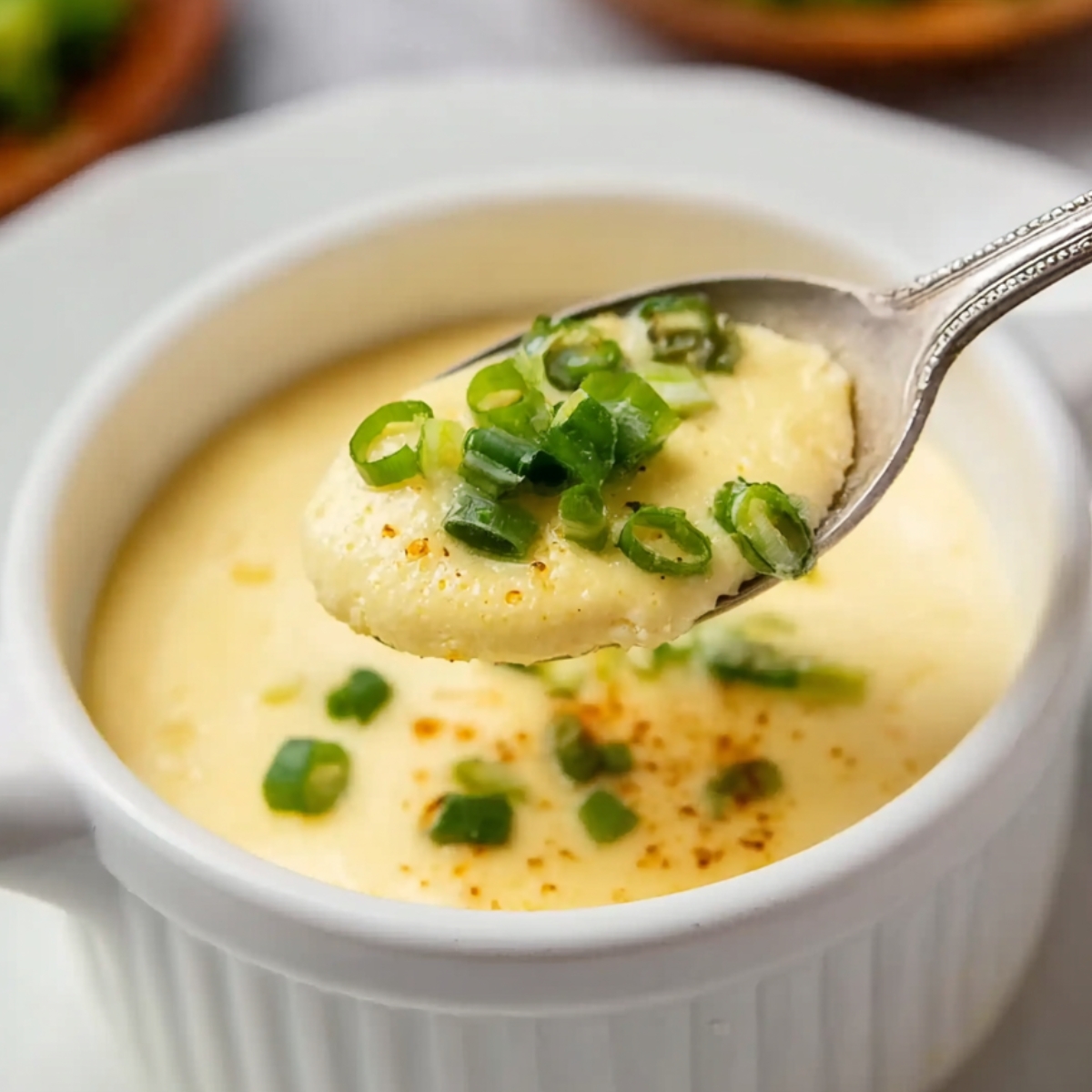
Chinese Steamed Eggs are the kind of dish that sneaks up on you. Three humble ingredients, fifteen minutes, and somehow the result is this impossibly smooth, quivering custard that tastes like something you'd pay good money for at a dim sum restaurant. The first time I made these, I was honestly a little shocked at how something this simple could taste so deeply comforting, like warm broth you can eat with a spoon.
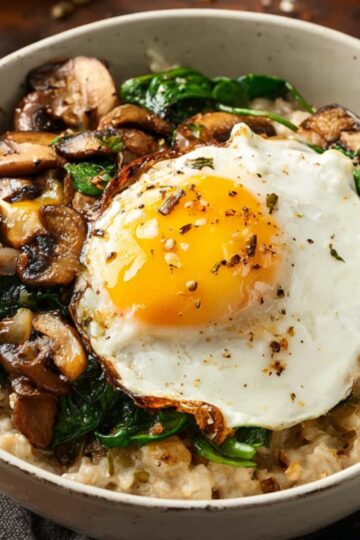
If you've been eyeing easy savory oatmeal recipe or our cozy easy bread pudding recipe for a no-fuss weeknight meal, these eggs belong right alongside them in your rotation.
The best part? You probably have everything in your kitchen already. No fancy tools, no hard-to-find ingredients. Just eggs, warm water, and a steamer. That's genuinely it.
Why You'll Love This Chinese Steamed Eggs
This dish is genuinely one of the easiest things you can make on a weeknight. The texture is silky and soft, completely different from scrambled or boiled eggs, and the flavor goes deep without any heavy seasoning. It feels fancy without being fussy, which is a rare combination in any kitchen.
It's also extremely budget-friendly. Two eggs, a little salt, and some water. The garnishes are what make it personal. Soy sauce and sesame oil are the classic finish, but a drizzle of chili oil turns it into something with a little more punch. It works as a light main dish, a side dish, or even a high-protein addition to your healthy homemade blintzes recipe spread for brunch.
Jump to:
- Why You'll Love This Chinese Steamed Eggs
- Chinese Steamed Eggs Ingredients
- How To Make Chinese Steamed Eggs
- Substitutions and Variations
- Equipment For Chinese Steamed Eggs
- Storage Your Chinese Steamed Eggs
- Serving Suggestions
- Expert Tips
- A Little Story From My Kitchen
- FAQ
- Related
- Pairing
- Chinese Steamed Eggs
Chinese Steamed Eggs Ingredients
Just three simple ingredients stand between you and the silkiest eggs you've ever had.
See Recipe Card Below This Post For Ingredient Quantities
- Eggs: The star of the dish. Two large eggs give you just the right amount of custard for two small ramekins. Fresh eggs with good yolks make a noticeably richer result.
- Salt: Just a quarter teaspoon. It balances the natural flavor of the egg and gives the custard a savory depth without overpowering anything.
- Warm Water: This is the secret to the silky texture. Warm water (not hot, not cold) blends more smoothly with the eggs and helps the custard set evenly during steaming. Cold water can create air bubbles that mess up the surface.
How To Make Chinese Steamed Eggs
Short and simple: this comes together in about fifteen minutes, start to finish.
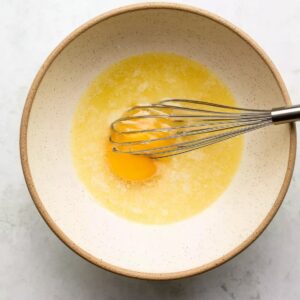
Whisk the eggs: In a medium bowl, gently whisk the eggs together with the salt until small bubbles form on the surface, about 1 minute. Don't overbeat them. You want the yolks and whites fully combined, but you're not going for a frothy scramble.
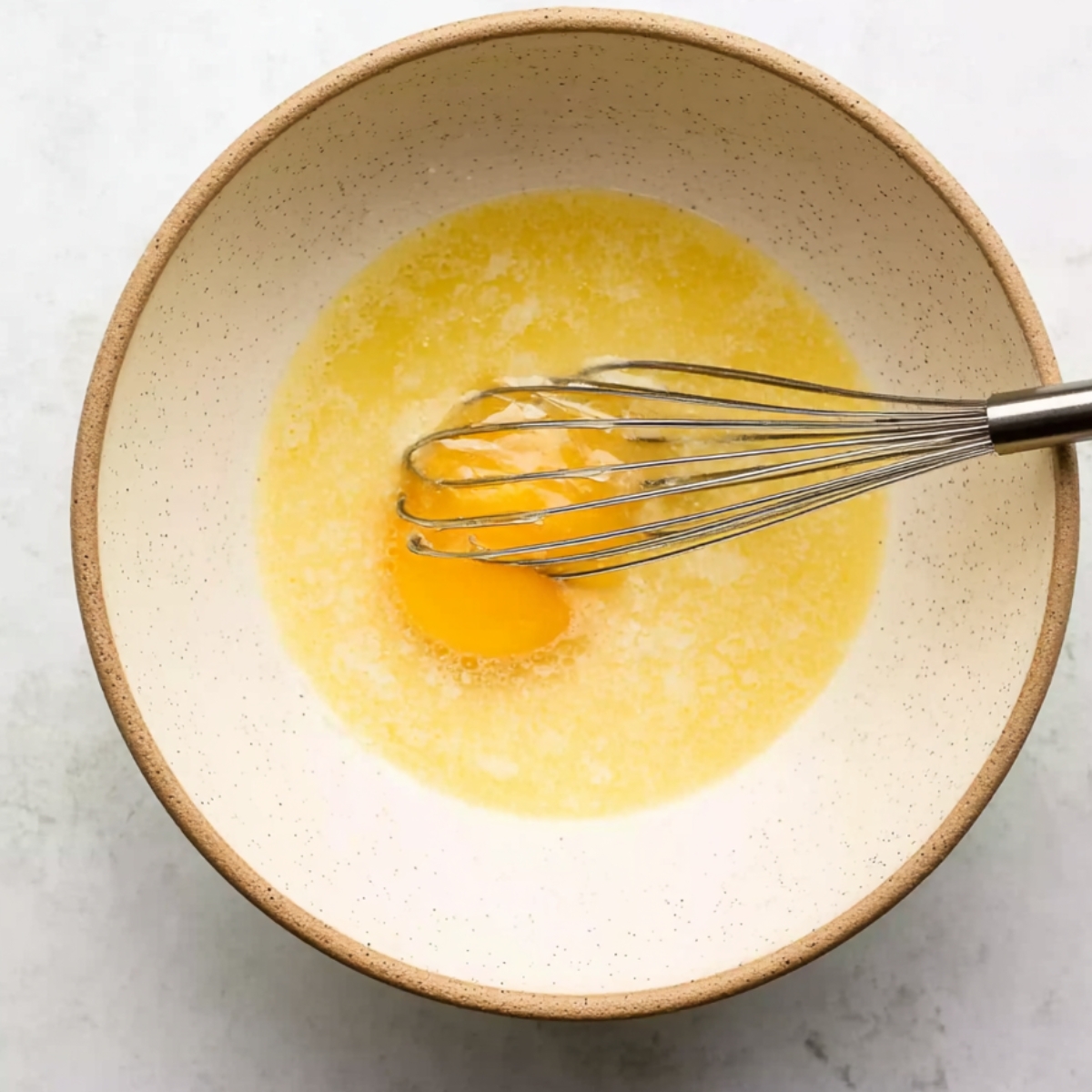
Add the warm water: Pour the 1 cup of warm water into the egg mixture and carefully whisk until everything is fully combined and smooth. The mixture should look pale, thin, and uniform.
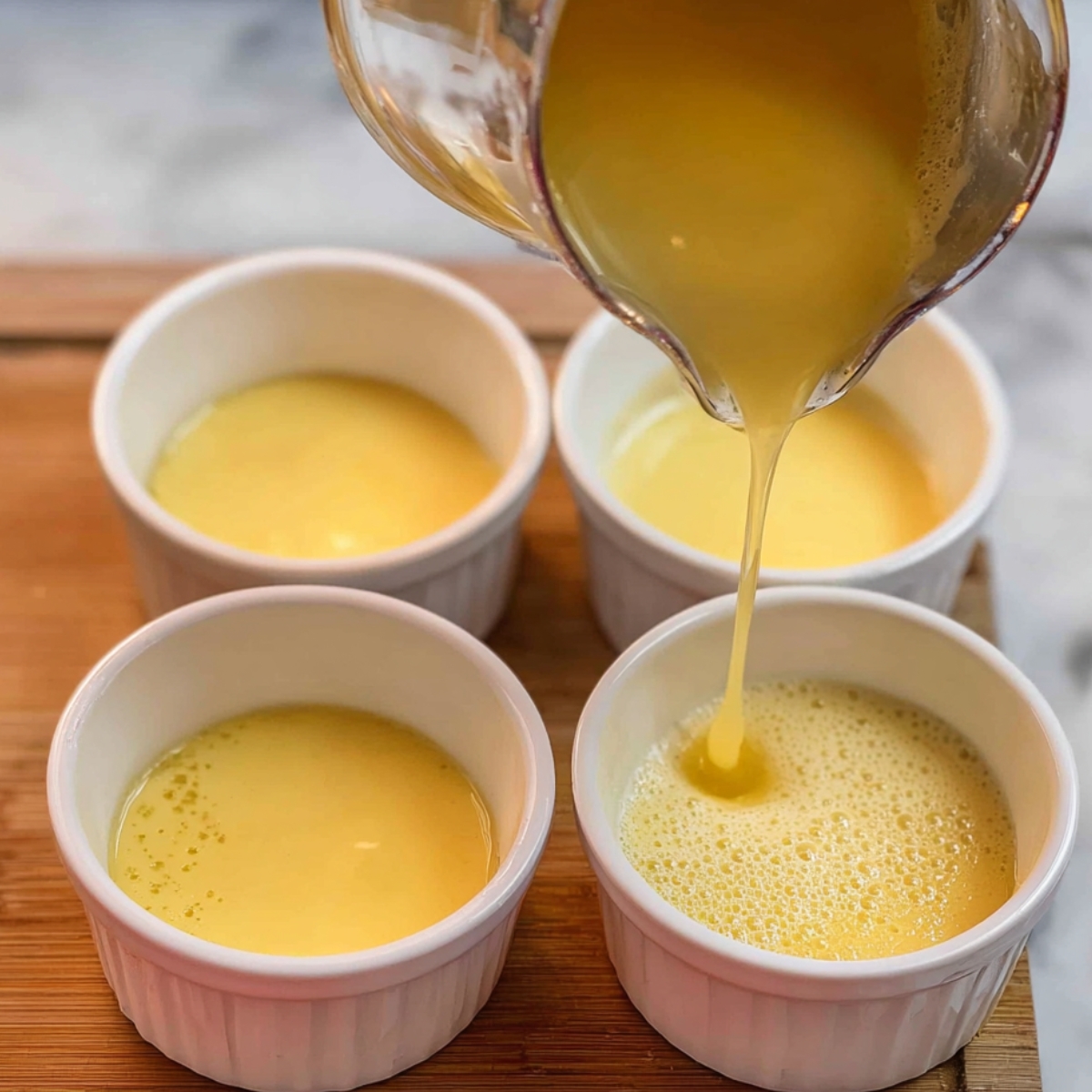
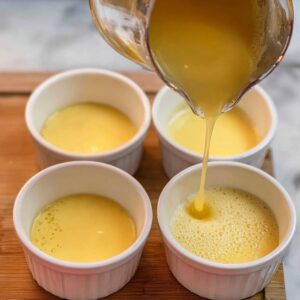
Strain the mixture: Pour the egg mixture through a fine-mesh sieve into 2 small ramekins or bowls. This step removes any chalazae or air bubbles, which is what gives the final custard that perfectly smooth, glassy surface. Cover each ramekin with plastic wrap or foil, then gently pierce the top once with a knife to create a steam vent. Don't skip this part.
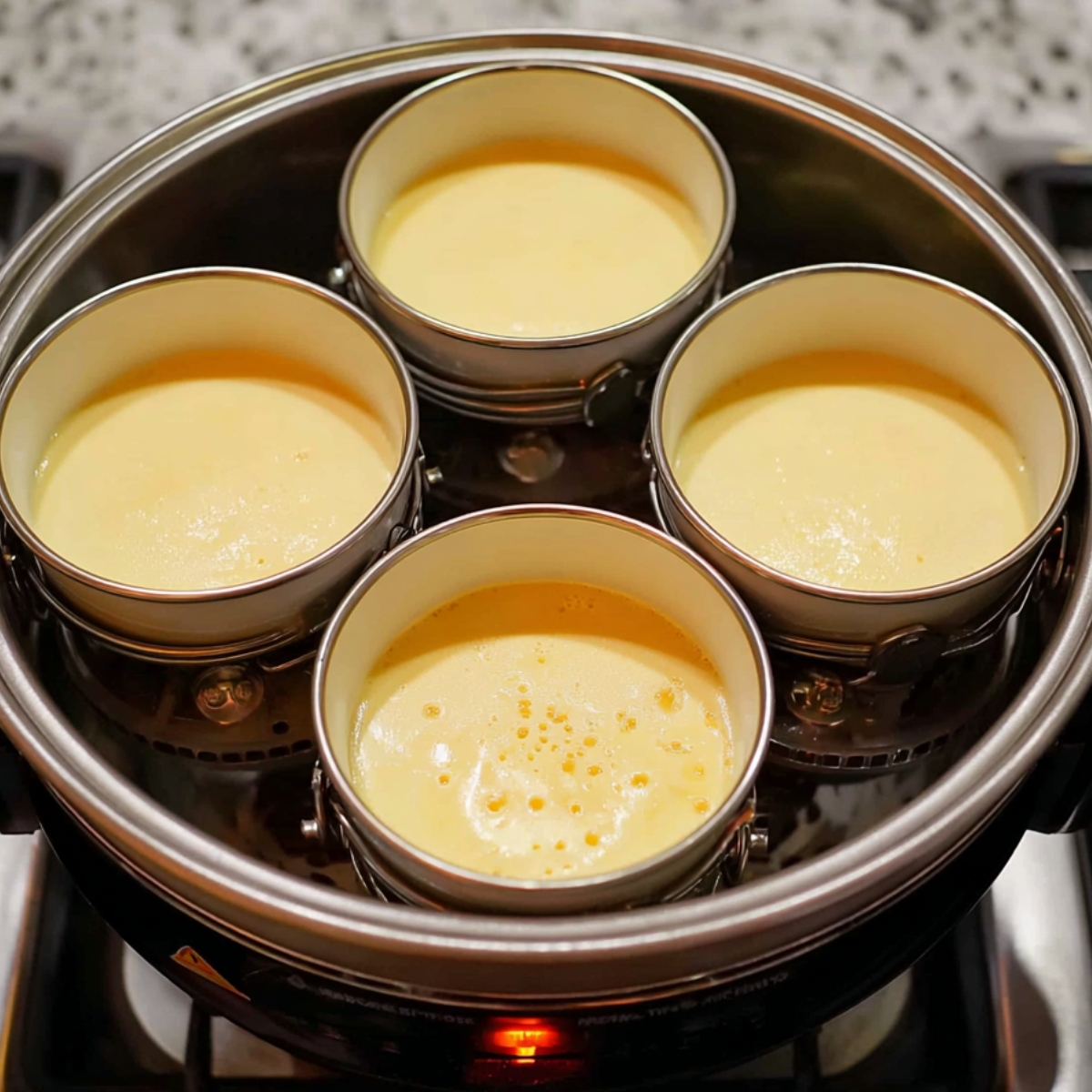
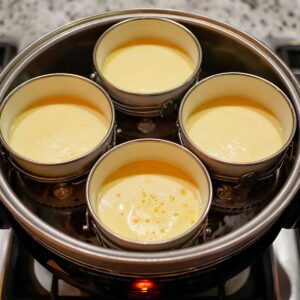
Prepare the steamer: Place a steamer rack inside a pot and fill the pot with water until it just reaches below the rack. Cover and bring the water to a full boil over high heat.
Steam the eggs: Once the water is boiling, carefully set the covered ramekins on the rack. Lower the heat to medium-low, put the lid back on, and steam for 10 minutes. The finished custard should be just set with a very slight jiggle in the center. It will look soft, not firm.
Garnish and serve: Carefully remove the ramekins from the steamer using tongs or a folded kitchen towel. Peel back the wrap and add your toppings: sliced scallions, a small drizzle of soy sauce, a few drops of sesame oil, chili oil, or a pinch of sesame seeds all work beautifully. Serve immediately while the custard is still warm.
Substitutions and Variations
No steamer rack? A heatproof bowl placed inside a pot of water works as a makeshift steamer. Just make sure the ramekins are elevated above the waterline.
No ramekins? Any small heatproof bowl, cup, or even a wide mug will work. Just make sure it fits inside your pot with the lid on.
For a richer version, you can swap part of the water for warm chicken broth or dashi. It deepens the umami flavor without much extra effort.
If you want to try Chinese steamed eggs with tofu, press a thin slice of silken tofu into the bottom of each ramekin before pouring the egg mixture over the top. It adds texture and protein.
Equipment For Chinese Steamed Eggs
- Medium bowl
- Fine-mesh sieve
- 2 small ramekins or bowls
- Steamer rack
- Pot with lid
- Knife (for the steam vent)
Storage Your Chinese Steamed Eggs
Chinese steamed eggs are best eaten fresh and warm, right out of the steamer. The custard texture doesn't hold up as well after refrigeration since it can become watery and slightly rubbery.
That said, if you do have leftovers, cover them tightly and refrigerate for up to 1 day. Reheat gently by re-steaming for 2 to 3 minutes over low heat. Don't microwave them; the texture will suffer.
Serving Suggestions
These Chinese Steamed Eggs are quiet and versatile in the best way. A few ideas for how to enjoy them:
Serve as a light breakfast alongside steamed rice and pickled vegetables for a traditional Asian-inspired morning meal.
Drizzle with soy sauce and sesame oil, then scatter scallions and sesame seeds on top for a simple but impressive side dish at dinner.
Pair with a bowl of congee or miso soup to keep things soft, warm, and deeply comforting on a cold day.
Add chili oil and a few drops of black vinegar for a spicy, tangy finish that transforms the flavor completely.
Expert Tips
Always use warm water, not cold and not boiling. The temperature matters for how smoothly the egg and water combine and how evenly the custard sets.
Straining is not optional if you want that silky surface. It takes thirty extra seconds and makes a real difference.
Keep the steam gentle. High heat creates bubbles inside the custard and gives you a pockmarked, spongy texture instead of the smooth result you're going for. Medium-low heat after the initial boil is the right call.
Don't lift the lid during steaming. Every peek lets out steam and can mess with the cooking time.
Cover with plastic wrap or foil, not just a plate. You want a close seal with a small vent, not a loose cover.
A Little Story From My Kitchen
I make these pretty regularly now, but the first time I tried to explain the Chinese Steamed Eggs to my neighbor Mia, she stared at me like I'd lost my mind.
"You're steaming... eggs?" she said, standing in my kitchen doorway, very skeptical.
"Just try it," I told her.
She hovered near the stove the whole ten minutes, peeking under the lid every two minutes until I finally swatted her hand away. When I pulled the ramekins out, she leaned in close, poked the surface gently, and watched it wobble like the softest jello she'd ever seen. One bite later, her skepticism was gone. The second ramekin was also gone, shortly after. I had to make another batch for myself.
The only mishap? I forgot to pierce the plastic wrap the first time and ended up with a little explosion of condensation dripping back in. The eggs were still good, but the steam vent step is not optional. Learn from me on that one.
FAQ
How long will it take to steam Chinese Steamed Eggs?
For Chinese steamed eggs at medium-low heat, 10 minutes is the sweet spot for a silky, just-set custard. Thicker ramekins or larger portions may need an extra minute or two. Always peek gently by giving the ramekin a tiny shake; the center should jiggle slightly but not slosh.
Is it better to steam or boil eggs?
For this Chinese Steamed Eggs, steaming every time. Steaming gives the eggs a completely different result from boiling. The gentle, indirect heat produces a smooth, custard-like texture that boiling simply can't replicate. Boiling cooks eggs in their shell; steaming this mixture creates an entirely different dish.
Is a steamed egg a poached egg?
They're related but different. A poached egg is cooked in simmering water while still whole, giving you a set white and runny yolk. Chinese steamed egg custard is a beaten egg mixture diluted with water and steamed until set, resulting in a completely smooth, uniform texture throughout. Different technique, different result, both delicious.
What are the three types of Chinese Steamed Eggs?
Generally speaking, Chinese Steamed Eggs steam recipe styles break into three categories: smooth and silky (the version here, using water or broth), hearty versions made with ingredients like tofu, clams, or minced pork mixed in, and savory egg custard recipes made with dashi or broth for a Japanese-influenced style. All three follow the same basic steaming method but land in very different flavor territory depending on what you add.
Related
Looking for other recipes like this? Try these:




Pairing
These are my favorite dishes to serve with Chinese Steamed Eggs




Chinese Steamed Eggs
Ingredients
- 2 large eggs fresh
- ¼ teaspoon salt for seasoning
- 1 cup warm water helps achieve smooth texture
Instructions
-
Gently whisk the eggs and salt in a medium bowl until small bubbles begin to form on the surface, about 1 minute.

- Add the warm water to the egg mixture, carefully whisking until fully combined.
-
Pour the egg mixture through a fine-mesh sieve into two small ramekins or bowls. Cover the ramekins with plastic wrap or foil and gently pierce with a knife to create a steam vent.
-
Place a steamer rack in a pot and add water just below the rack. Cover and bring to a boil over high heat. Once boiling, carefully lower the ramekins onto the steamer rack and reduce the heat to medium-low. Cover and steam for 10 minutes.
- Remove the ramekins from the steamer and garnish with desired toppings. Serve immediately.

Leave a Reply