
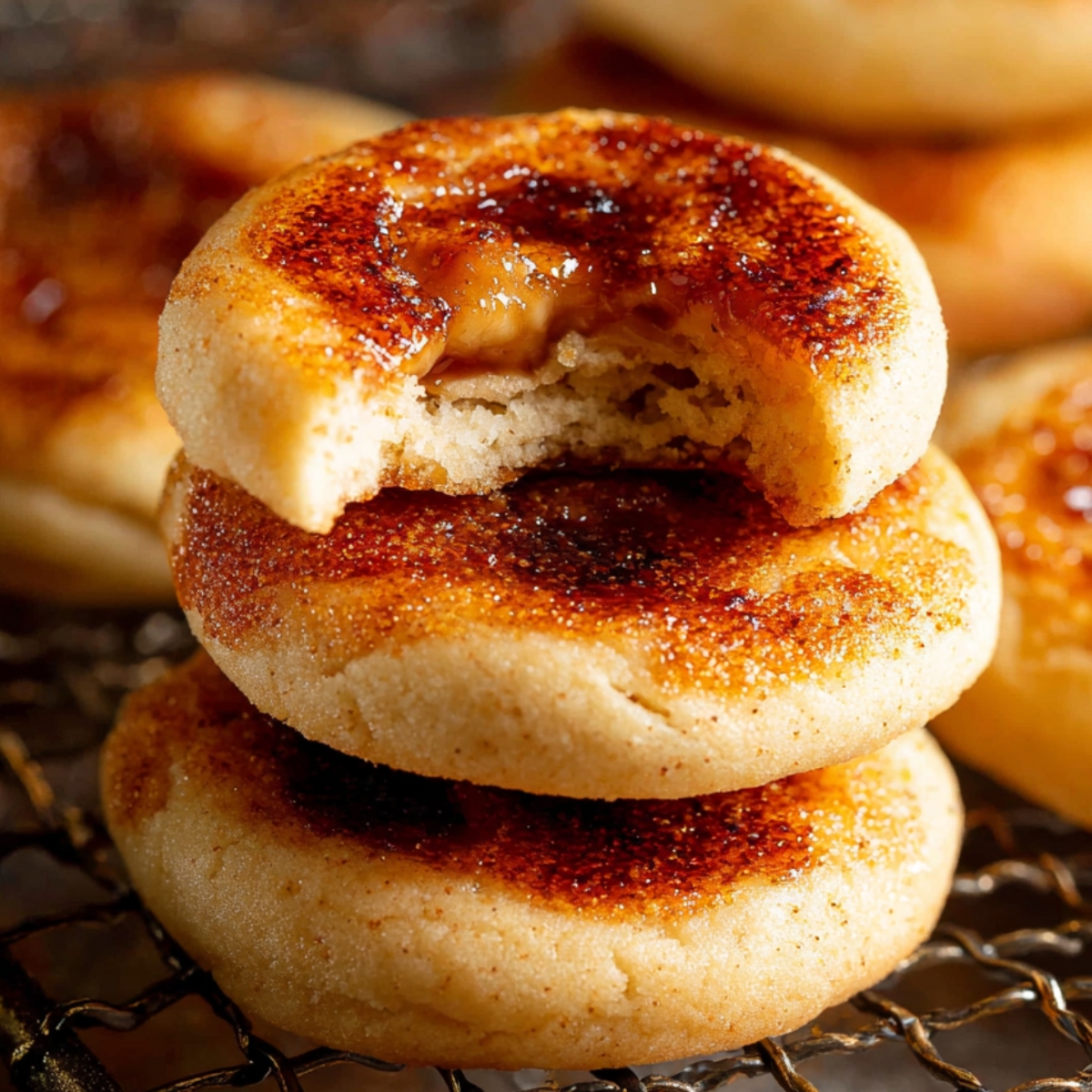
Soft sugar cookies, smooth vanilla cream, and that satisfying crack when you bite through caramelized sugar. I made these creme brûlée cookies after a dinner party last year when I had leftover custard and couldn't stop thinking about how good that burnt sugar top would taste on a cookie. Turns out, it's even better than I imagined. The cookies stay chewy for days, the vanilla pastry cream is rich without being heavy, and torching the sugar makes you feel like you're doing something fancy even though it's honestly pretty easy.
If you've made Boston Cream Pie Cookies or tried Easy Mango Tres Leches, you already know how good layered desserts can be. My daughter Emma still asks to help torch these every time, and my friend Ryan says they're better than the actual dessert.
Why You'll Love These Creme Brûlée Cookies
These Creme Brûlée Cookies give you restaurant-quality results at home without fancy equipment or complicated steps. The dough comes together quickly, and the pastry cream, while it takes a little patience, uses ingredients you probably already have. You get that iconic caramelized sugar cookies crunch on top, creamy vanilla pastry cream cookies in the middle, and a soft sugar cookie base that stays chewy for days.
They're perfect for impressing guests but easy enough for a weekend baking project. The torching step is fun and surprisingly forgiving. If you've ever wanted to try making something that looks like it came from a French bakery, this is your recipe. Plus, they're elegant dessert cookies that work for holidays, dinner parties, or just because you want something special. The contrast between the crackling Creme Brûlée Cookies sugar topping and the silky custard makes every bite interesting.
If you're a fan of Chocolate Cherry Cookies or other bakery-style sugar cookies, you'll love how these combine textures and flavors in a way that feels indulgent but not overwhelming.
Jump to:
Ingredients Creme Brûlée Cookies
Here's a simple introduction to what goes into making these Creme Brûlée Cookies.
See Recipe Card Below This Post For Ingredient Quantities
For the Cookies
Butter: Softened unsalted butter creates the rich, tender base. Make sure it's at room temperature so it creams properly with the sugars.
Granulated sugar: Adds sweetness and helps the cookies spread slightly while baking.
Brown sugar: Light brown sugar brings moisture and a hint of caramel flavor that complements the brûléed topping.
Vanilla extract: Pure vanilla extract enhances the overall flavor and ties the cookie and pastry cream together.
Kosher salt: Balances the sweetness and makes all the other flavors more pronounced.
Egg: Binds the dough and adds moisture.
Egg yolk: An extra yolk makes the cookies even softer and chewier.
Flour: All-purpose flour forms the structure. Spoon and level your flour to avoid dense cookies.
Baking soda: Helps the cookies rise slightly and stay tender.
For the Pastry Cream
Milk: Whole milk works best for a rich, creamy custard.
Vanilla extract: Adds classic vanilla flavor to the pastry cream.
Granulated sugar: Sweetens the cream and helps it thicken.
Cornstarch: Thickens the custard without making it heavy or eggy.
Egg yolks: Give the pastry cream its silky texture and custard-like richness.
Butter: Stirred in at the end for extra smoothness and a glossy finish.
How To Make Creme Brûlée Cookies
Here's how to bring these Creme Brûlée Cookies together step by step.
Make the Pastry Cream
Heat the milk: Place a saucepan over medium-high heat and add the milk and vanilla extract. Bring it to a gentle simmer, then remove from the heat. Scoop out ¼ cup of the hot milk and set it aside.
Mix the sugar and cornstarch: In a small mixing bowl, whisk together the sugar and cornstarch until there are no lumps.
Add the egg yolks: Whisk in the egg yolks until smooth, then slowly pour in the reserved ¼ cup of warm milk while whisking constantly. This tempers the yolks so they don't scramble.
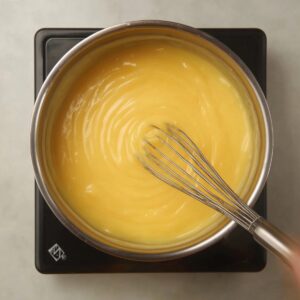
Cook the custard: Return the saucepan to the stovetop over low heat. Slowly pour the egg yolk mixture into the warm milk, whisking the entire time. Keep whisking constantly until the mixture thickens. Don't rush this part or turn up the heat, patience gives you a smooth, lump-free pastry cream.
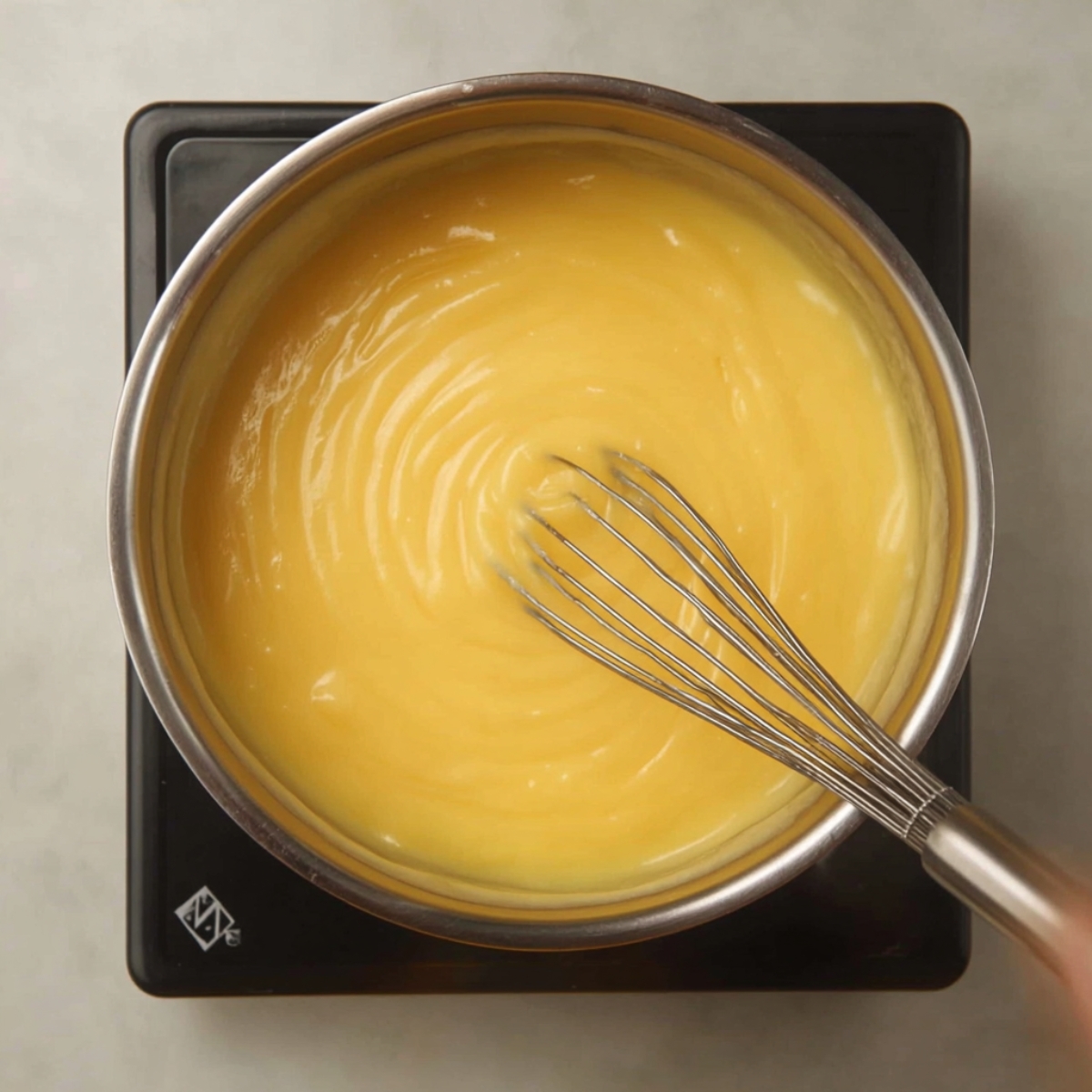
Finish with butter: Once thickened, remove from heat and stir in the butter until it melts completely and the mixture looks silky.
Chill: Transfer the pastry cream to a bowl and press plastic wrap directly onto the surface to prevent a skin from forming. Refrigerate for a few hours until fully cooled and set.
Make the Cookie Dough
Cream the butter and sugars: In a large mixing bowl, add the softened butter, granulated sugar, brown sugar, vanilla extract, and kosher salt. Beat with an electric hand mixer until creamy and well combined, about 2 minutes.
Add the eggs: Mix in the egg and egg yolk until smooth.
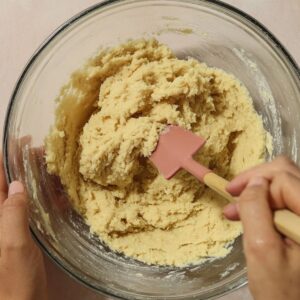
Add the dry ingredients: Add the flour and baking soda, and mix just until the dough comes together and no flour streaks remain. Don't overmix or the cookies will be tough.
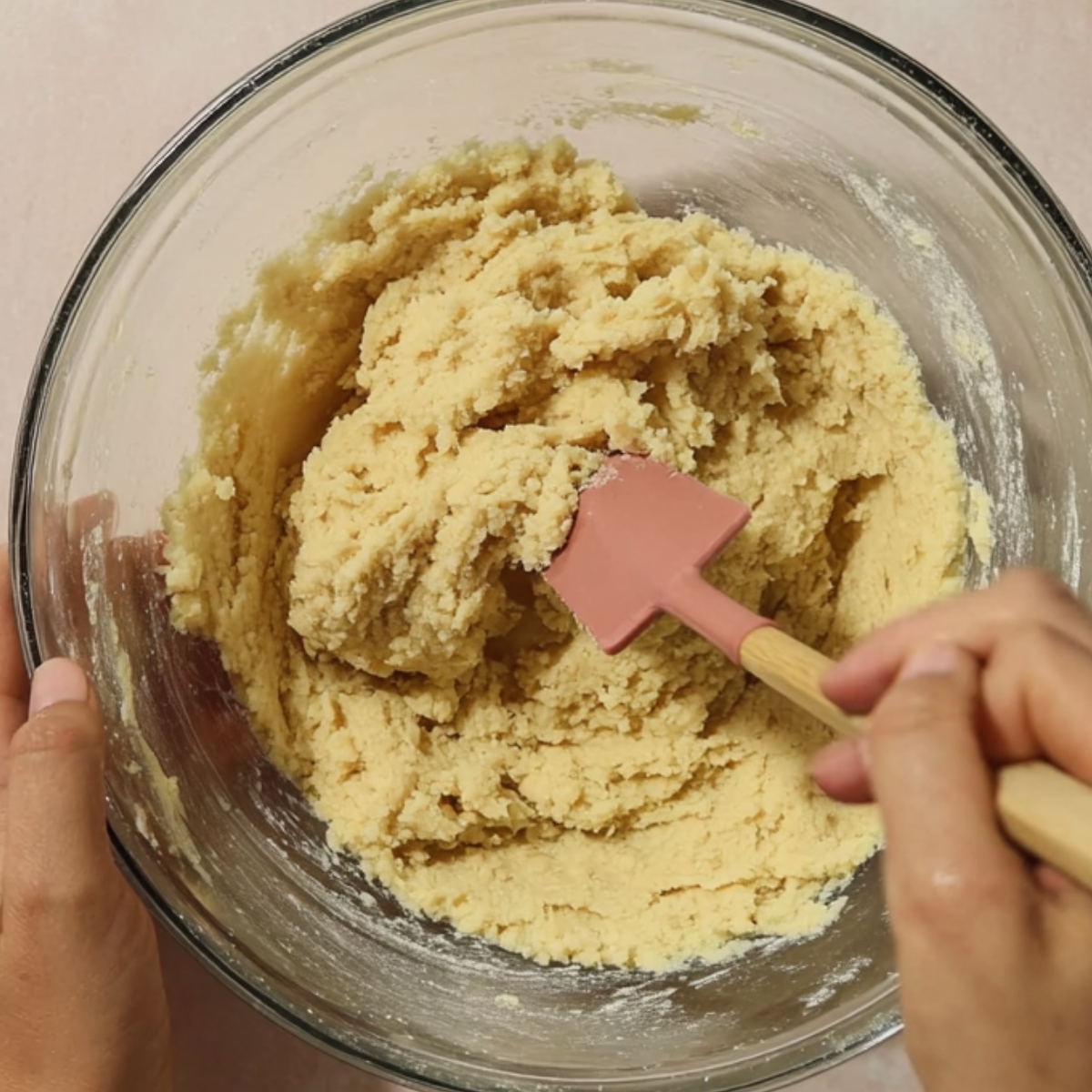
Scoop the dough: Use a large cookie scoop or scoop about 1½ tablespoons of dough and roll into smooth balls. Place them on a parchment-lined baking sheet, spacing them about 2 inches apart.
Bake: Bake in a preheated 180°C (350°F) oven for 10 minutes, or until the edges are lightly golden. The centers should still look slightly soft. Don't overbake, these cookies are meant to stay soft and chewy.
Cool: Let the cookies cool on the tray for 5 minutes, then transfer them to a wire rack to cool completely.
Assemble the Cookies
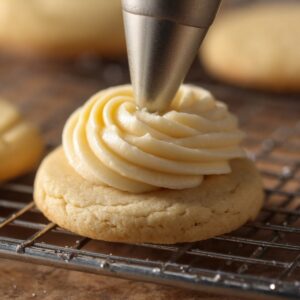
Pipe the pastry cream: Once the cookies are completely cool, transfer the chilled pastry cream to a piping bag fitted with a round tip. Pipe a generous swirl onto the center of each cookie.
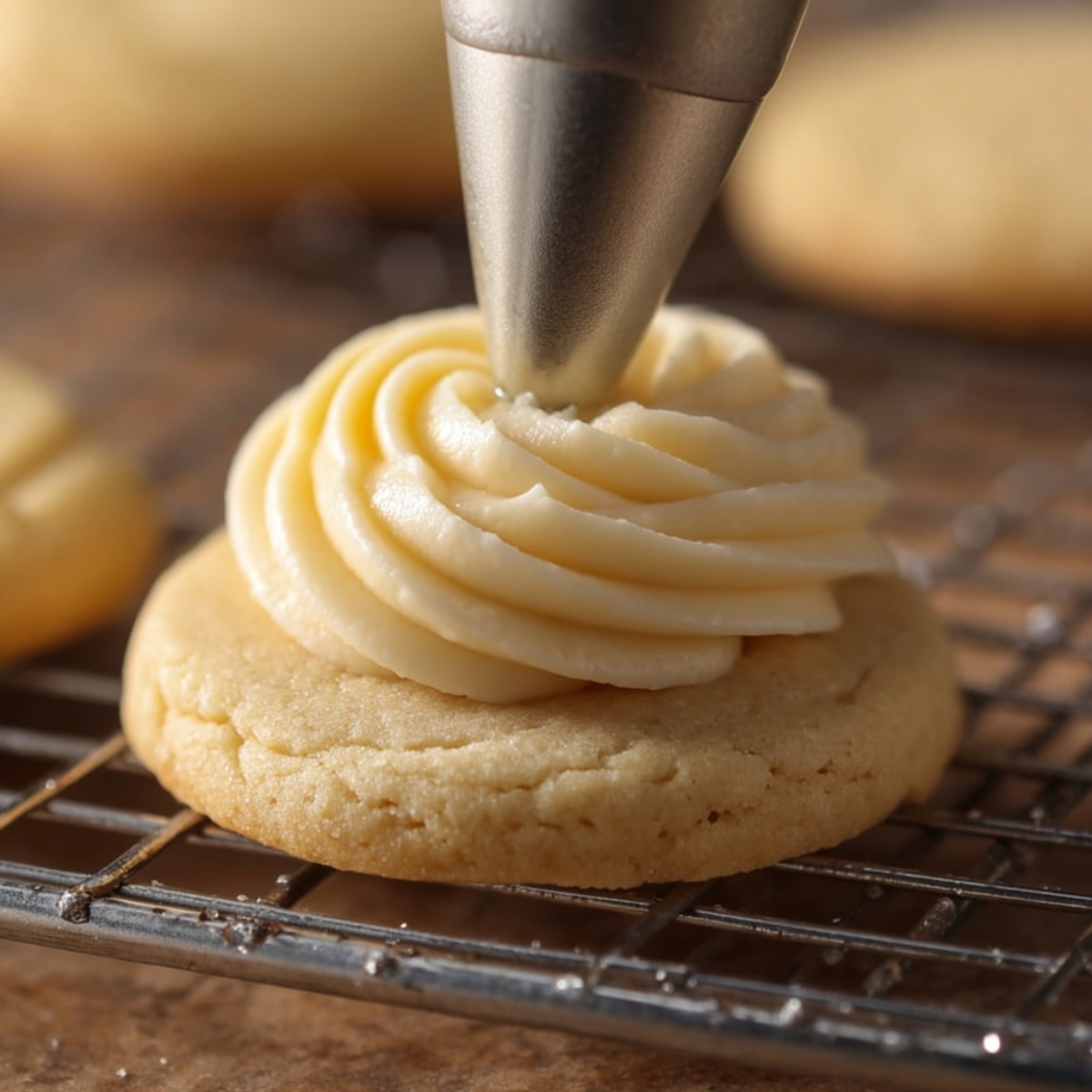
Add the sugar: Sprinkle a thin layer of granulated or caster sugar over the pastry cream.
Torch: Use a kitchen torch to caramelize the sugar until it melts and turns golden brown, creating that signature Creme Brûlée Cookies crust. Move the flame in light, steady circles to avoid burning.
Substitutions and Variations
No kitchen torch? You can place the sugared cookies under the broiler for 1 to 2 minutes, watching closely. The results won't be quite as even, but you'll still get a caramelized top.
Swap the milk: Use half-and-half or a mix of milk and heavy cream for an even richer pastry cream.
Try brown sugar on top: Brûléeing brown sugar gives a deeper, more molasses-like flavor.
Add citrus: A teaspoon of lemon or orange zest in the pastry cream adds a bright, unexpected twist.
Make cookie bars: Press the dough into a parchment-lined pan, bake, cool, spread with pastry cream, and torch. Slice into squares for Creme Brûlée Cookies bars.
Equipment Creme Brûlée Cookies
You'll need a saucepan for cooking the pastry cream and a whisk to keep it smooth. An electric hand mixer makes creaming the butter and sugar easier, though you can do it by hand if needed. A cookie scoop helps portion the dough evenly so all the cookies bake at the same rate.
A piping bag with a round tip gives you neat swirls of pastry cream, but you could also use a zip-top bag with a corner snipped off. The kitchen torch is the key tool for caramelizing the sugar, and it's surprisingly easy to use once you get the hang of it. You'll also want parchment paper for lining your baking sheets and a wire cooling rack so the cookies cool evenly.
Storage Yor Creme Brûlée Cookies
Store these Creme Brûlée Cookies in an airtight container in the refrigerator for up to 3 days. The pastry cream needs to stay cold, so don't leave them at room temperature for more than an hour or two.
For best results, torch the sugar just before serving. If you torch ahead of time, the caramelized layer can soften after a few hours in the fridge. You can prep the cookies and pastry cream a day in advance, then assemble and torch right before guests arrive.
The cookie dough freezes beautifully. Scoop the dough into balls, freeze on a tray, then transfer to a freezer bag. Bake from frozen, adding an extra minute or two to the bake time. The pastry cream also freezes well for up to a month. Thaw in the fridge overnight and whisk smooth before piping.
Expert Tips
Measure your flour correctly by spooning it into the measuring cup and leveling it off with a knife. Scooping directly from the bag packs in too much flour and makes dense cookies.
Use room-temperature ingredients so the butter creams properly and the eggs incorporate smoothly.
Don't rush the pastry cream. Cook it low and slow, whisking constantly. This prevents lumps and gives you a silky, smooth custard.
Chill the pastry cream fully before piping. If it's too warm, it'll slide off the cookies.
Don't overmix the dough. Mix just until the flour disappears to keep the cookies soft and tender.
Bake until just set. The edges should be lightly golden and the centers should still look slightly soft. They'll firm up as they cool.
FAQ
What is the difference between crema catalana and Creme Brûlée Cookies?
Crema catalana is a Spanish dessert made with milk, cornstarch, and citrus zest, while Creme Brûlée Cookies is French and uses heavy cream and egg yolks for a richer custard. Both have caramelized sugar on top, but crema catalana is lighter and often flavored with cinnamon or lemon. For these cookies, we use a pastry cream that's closer to crème brûlée in spirit but easier to pipe.
What type of biscuit is Creme Brûlée Cookies?
Traditional Creme Brûlée Cookies isn't a biscuit at all it's a baked custard dessert with a hard caramel top. These cookies are inspired by those flavors but use a soft sugar cookie base instead of custard. Think of them as a handheld version of the classic dessert.
What are some common mistakes when making Creme Brûlée Cookies?
The biggest mistake is cooking the custard over high heat, which can make it grainy or cause the eggs to scramble. Another is not chilling the custard fully before torching, which makes the sugar harder to caramelize evenly. For these cookies, make sure your pastry cream is completely cool and your cookies are fully set before assembling.
What is the cream in crème brûlée called?
The cream in traditional Creme Brûlée Cookies is called custard or pastry cream. It's made by cooking egg yolks, sugar, and milk or cream until thick and silky. In these cookies, we use a vanilla pastry cream that's sturdy enough to pipe but still creamy and smooth.
Related
Looking for other recipes like this? Try these:


Pairing
These are my favorite dishes to serve with Creme Brûlée Cookies



Creme Brûlée Cookies
Ingredients
- 0.85 cup unsalted butter softened at room temperature for easy mixing
- 0.6 cup granulated sugar fine white sugar for sweetness and structure
- 0.4 cup light brown sugar loosely packed for moisture
- 2.25 teaspoons vanilla extract pure vanilla for best flavor
- 0.55 teaspoon kosher salt fine grain preferred for even seasoning
- 1 large egg room temperature for smooth dough
- 1 large egg yolk adds richness to the cookie texture
- 2.5 cups all-purpose flour spooned and leveled for accuracy
- 1.1 teaspoons baking soda fresh for proper rise
- 1.65 cups whole milk full-fat for creamy pastry cream
- 2.25 teaspoons vanilla extract added warmth and aroma
- 0.75 cup granulated sugar divided for sweetness balance
- 3.3 tablespoons cornstarch thickening agent for cream
- 6 large egg yolks creates silky custard texture
- 2.2 tablespoons unsalted butter added at the end for gloss
- 0.4 cup granulated sugar for torching into caramel topping
Instructions
- Warm the milk with vanilla in a saucepan over medium heat until gently steaming, then take it off the heat and set aside ¼ cup separately.
- Stir the sugar and cornstarch together in a bowl until evenly blended.
- Whisk in the egg yolks until smooth, then gradually stream in the reserved warm milk while whisking continuously.
-
Place the saucepan back over low heat and slowly whisk the egg mixture into the remaining milk.

- Keep whisking steadily over low heat until the mixture thickens into a smooth custard without increasing the heat.
- Remove from heat and stir in the butter until fully melted and glossy.
- Transfer the pastry cream to a bowl, press plastic wrap directly on the surface, and refrigerate until completely chilled and set.
- Cream the softened butter, granulated sugar, brown sugar, vanilla, and salt together in a large bowl until light and fluffy.
-
Blend in the egg and extra yolk until the mixture looks smooth and cohesive.
- Gently mix in the flour and baking soda just until no dry streaks remain.
- Portion the dough into equal scoops, roll into balls, and arrange on a parchment-lined baking sheet.
- Bake in a 350°F (180°C) oven until the edges turn lightly golden while centers remain soft.
- Let the cookies rest on the baking sheet briefly, then transfer to a rack to cool completely.
-
Pipe a generous swirl of chilled pastry cream onto each cooled cookie.
- Sprinkle sugar evenly over the cream and carefully torch until melted and amber in color.

Leave a Reply